

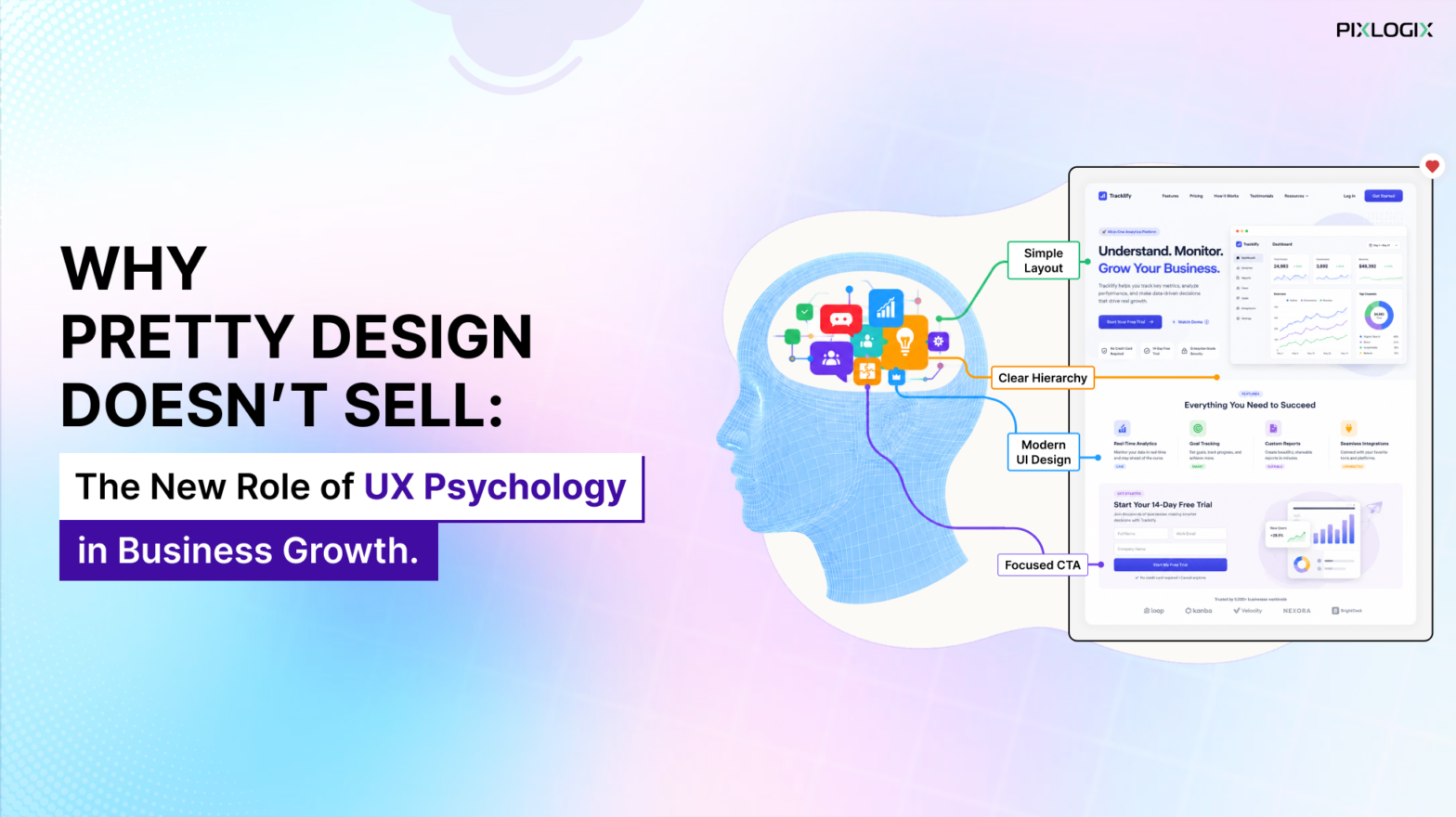
We are now living in a competitive digital space. Modern-day users might get attracted to a visually appealing website design. But it doesn’t guarantee they’ll stay or convert. Think about it: how often have you left a good-looking website? The reason is simple: you felt it was confusing or difficult to use. That’s the gap where most businesses lose potential customers.
This is where UX design backed by psychology makes the difference. Modern user experience design looks like how users think. It reflects what they expect and what drives their decisions. Such a well-planned design removes friction. It also builds trust and guides users toward clear actions–whether it’s signing up or exploring further.
The Wi-Fi Talents 2026 UX report revealed some key insights. It stated that nearly 88% of users never visit a website with a poor user experience. This shows how it directly impacts retention and revenue. The shift is even more evident with AI user experience. It gives more importance to personalization. Because users now expect tailored interactions that feel intuitive and relevant at every step. Overall, user experience design has become a key business strategy. It helps companies improve performance, retain users, and drive consistent business growth.
In this blog, we’ll break down why pretty designs often fail to convert. We’ll also explore the role of UX psychology and the key principles every website must follow. By the end, you’ll know why to invest in quality design. And how it drives measurable ROI and long-term success.
Why “Pretty Design” Alone Doesn’t Convert?
The real issue isn’t visual design. The problem isn’t visible-it’s the missing depth underneath. As we are in 2026, many businesses prioritize aesthetics. And they expect it to support conversion optimization. But mostly it fails to address how users actually process information and make decisions. This might result in visually polished interfaces that attract. But it often underperforms where it matters most-driving action.
Keep in mind, conversions are driven by clarity. When users land on a page, they subconsciously evaluate effort. They’ll check: How quickly can I understand this? What should I do next? If the interface increases cognitive load, users drop off. Unclear hierarchy, competing CTAs, and inconsistent interactions are the major growth hinders here. This is where user experience design basics become critical. It primarily focuses on reducing friction and making decision paths obvious.
Now you might think–how do high-performing websites grow faster? It’s because they don’t treat design as decoration. They approach it as a system-where layout, content structure, and interaction patterns work together to guide behavior. Also, they place every element intentionally. From buttons to visuals, all are engineered with clarity. It maximizes decision fatigue and accelerates user flow. This shows the true impact of UX design on business growth. When users can act confidently, engagement flows naturally. Also, conversions grow, and digital experiences start delivering real business outcomes.
The Psychology Behind UX That Drives Decisions
Every digital interaction is shaped by UX psychology. It is the layer that determines how users perceive, process, and act. In high-performing products, design is not just about usability. It’s about reducing decision friction at every step.
In general, users don’t engage logically. They scan, filter, and act based on mental shortcuts. To understand user psychology behind UX, a leading UI/UX agency conducted an eye-tracking study. It showed a consistent F-pattern behavior, meaning critical elements must be visible within seconds. This also highlights the importance of conversion rate optimization strategies.
In 2025, Baymard Institute reported on users’ design psychology. According to that, 70% of digital buyers abandoned websites with poor UX business designs. This shows how it directly impacts conversion and revenue.
Key principles influencing user decisions:
- Hick’s Law: Don’t give them more choices, as it increases decision time and drop-offs.
- Cognitive Load: Avoid adding excess information. It reduces clarity and slows action.
- Fitts’ Law: Interaction effort directly affects completion rates.
How high-performing UX systems respond:
- Priorities visual hierarchy. It helps them surface key actions instantly.
- To simplify workflows, they use progressive disclosure.
- Include social proof and urgency. These insights build trust and reduce hesitation.
- Design low-effort CTAs. They also ensure seamless navigation to accelerate movement.
When you visit the site of any top-rated UI/UX design company in India, their page does not have any multi-step checkout options. Instead, they simplify it into a guided flow. These user experience design basics reduce abandonment by minimizing decision fatigue.
Quick Takeaway: At scale, UX psychology can become a business lever. But only when every interaction is optimized, tested, and refined. This approach improves conversion and retention rates.
Core UX Principles Every Business Website Must Follow
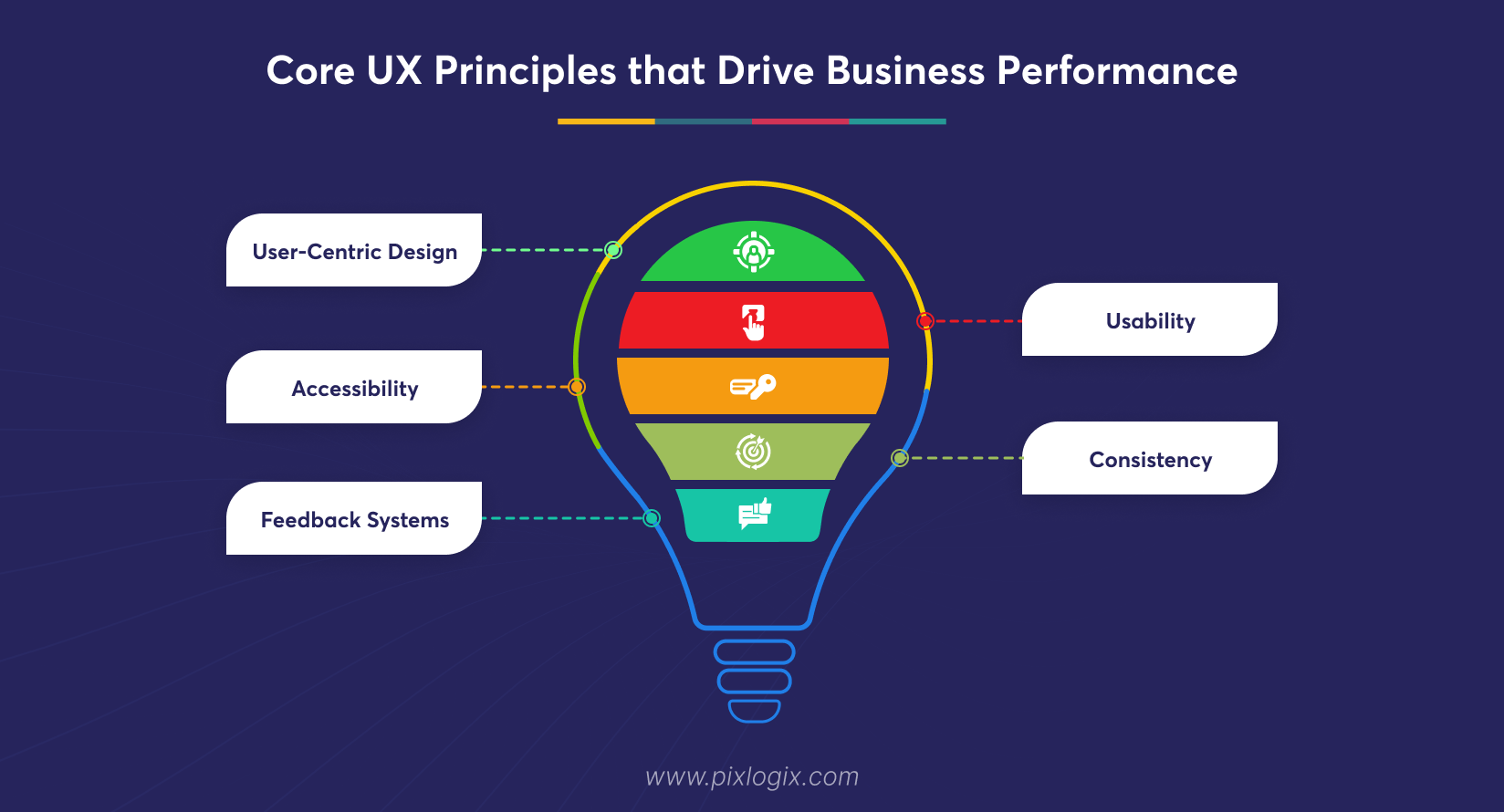
Every business website operates as a decision-making interface. It is the place where users evaluate, trust, and act within seconds. So, every website needs strong UX foundations. If not, they fail to convert, leading to lost opportunities and higher drop-offs. This is why modern-day businesses are following structured UX principles.
Core principles that drive performance:
User-Centric Design:
Decisions should not be assumptions. It must be grounded in user behavior, analytics, and intent. This ensures alignment with real user goals.
Usability:
Clear navigation reduces friction. Intuitive flows ensure a seamless journey. Thus, it’s essential to simplify the checkout process.
Accessibility:
Inclusive design reaches users faster. Readable content, proper contrast, and assistive tech compatibility further boost business growth. They also ensure compliance and usability.
Consistency:
Uniform design patterns across pages reduce the learning curve. It also improves interaction speed, especially in complex platforms.
Feedback Systems:
Real-time responses increase confidence. This includes loading states, confirmations, and error cues. They also help users stay informed during interactions.
Apply these principles strategically. It acts as a fuel, delivering lasting results.
Quick Takeaway: Stick to these core UX principles. So that your website starts working like a conversion engine. You’ll see stronger engagement. Smoother user journeys deliver better performance as you scale.
UX Metrics That Tie Directly to Business Growth
UX metrics are no longer just performance indicators. They are decision-making signals that directly impact revenue, retention, and conversion optimization. A professional website design company can help you find these key metrics. By identifying friction points, they enable you to optimize user journeys at scale.
Key UX metrics and what they reveal:
Conversion Rate
Reflects how effectively the interface drives action. A drop often indicates friction in critical flows like checkout or sign-up.
Bounce Rate
High bounce rates point to a major issue. It highlights the typical mismatch between user intent and page experience. It may be due to poor messaging. Slow load times and weak visual hierarchy also increase drop-offs.
Task Completion Rate
Measures usability in action. Low completion rates highlight broken flows or unclear navigation paths.
CSAT & NPS
Go beyond usability to ensure satisfaction. They are the key drivers of retention.
Time on Task
Longer times can indicate confusion. In contrast, streamlined flows reduce friction and enhance efficiency.
High-performing teams don’t just track these metrics. They test through A/B experiments. And iterate continuously through behavioral analysis.
Quick Takeaway: Tie your UX metrics directly to what you’re trying to achieve. Then, it acts like your growth framework. It also enables teams to systematically reduce friction and scale user-centric experiences.
The ROI of UX – How It Moves the Needle on Business KPIs
UX is no longer a design function. It’s a measurable growth driver tied directly to revenue, retention, and operational efficiency. The impact of UX design on business growth is clear. Even small experience improvements can drive significant shifts in key business KPIs.
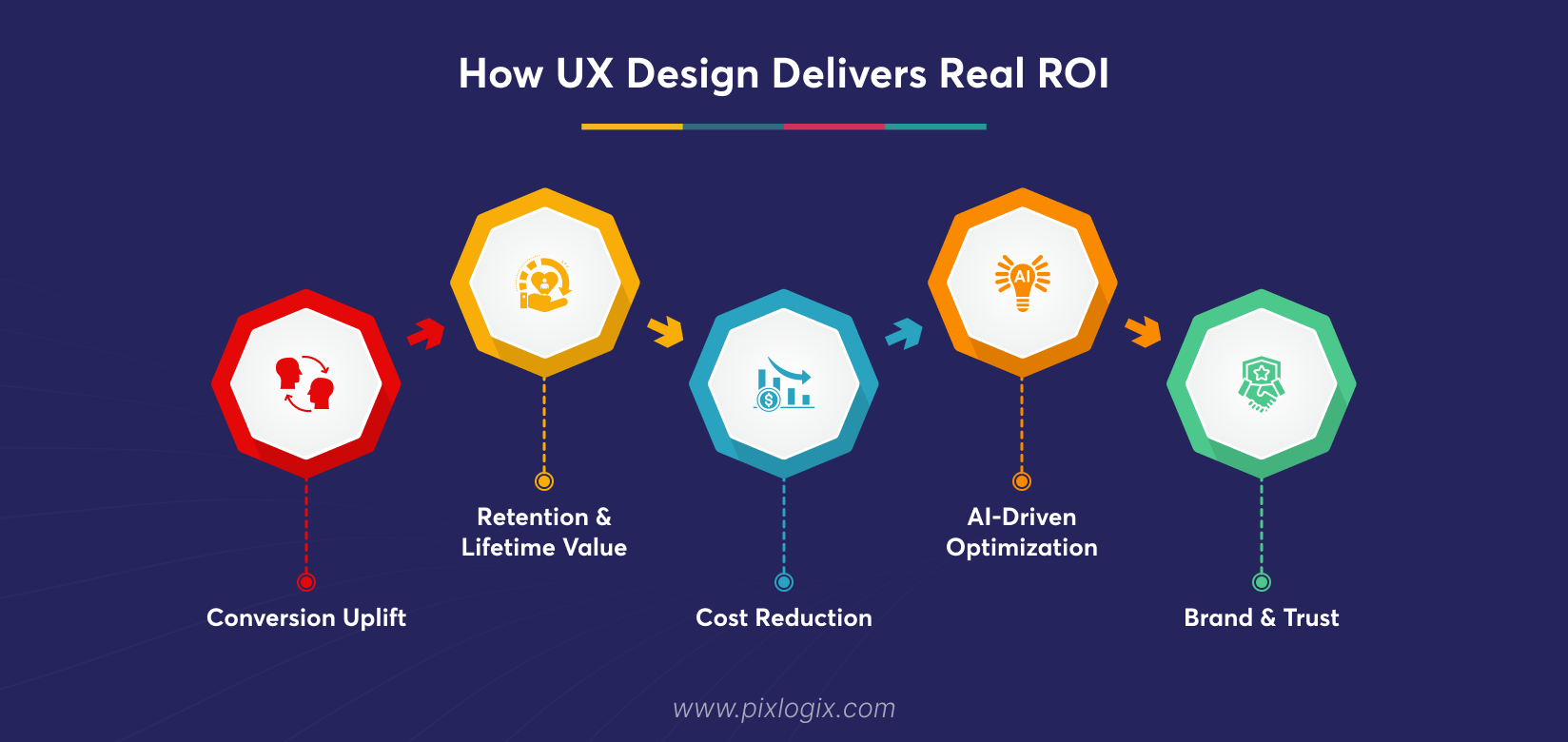
How UX delivers real ROI:
Conversion Uplift
Frictionless flows and optimized interactions directly increase conversions. In fact, strong UX can boost conversion rates. It can rise to 400%. This makes it one of the major growth levers.
Retention & Lifetime Value
Better experiences reduce churn. Just a 5% gain in retention has the potential to drive profits up by 25–95%. This shows how UX compounds long-term value.
Cost Reduction
Early-stage UX validation minimizes rework. It also supports costs and improves overall development efficiency.
AI-Driven Optimization
Modern AI systems enable real-time personalization. It adapts interfaces based on behavior to increase engagement and session value.
Brand & Trust
Consistent, intuitive experiences strengthen credibility. Thus, it is critical in competitive digital markets.
Quick Takeaway: UX isn’t a design choice–it’s a financial lever. So, optimize every interaction to reduce friction. The right design also improves decision speed and maximizes business KPIs.
Conclusion
“Pretty design” may attract attention. But user experience design consistently converts and grows. That’s why high-performing businesses don’t treat UX as a visual layer. They built it as a data-driven system. It primarily focuses on reducing friction and guiding user decisions. From psychology-led design to continuous testing, every interaction matters. AI-driven experiences are evolving at a faster pace today. This makes the role of UX even more important. What truly sets your website apart isn’t its visual design. It’s how effectively it moves users to act, consistently and at scale.
Ready to Make Your Website Work Smarter-and Convert Better? Then, partner with a trusted UI/UX design company in India like Pixlogix. Our UX experts will understand your true business goals and suggest the right approach. This will help you transform your digital presence. Contact us today! Let’s turn every interaction into measurable business growth.

Frequently Asked Questions
Why is UX psychology essential for improving website conversions?
UX psychology helps align design with how users think and decide. By reducing cognitive load, guiding attention, and simplifying choices, it enables smoother interactions that directly improve conversion outcomes.
What role does UX design play beyond visual appeal in digital experiences?
UX design goes beyond aesthetics by structuring user journeys, simplifying navigation, and optimizing interactions. It ensures users can understand, engage, and act quickly, driving measurable business performance.
How can businesses apply UX principles to drive measurable growth?
Businesses can apply UX principles by focusing on user behaviour, simplifying workflows, and maintaining consistency across interfaces. This reduces friction, improves engagement, and strengthens both conversion rates and retention.
Can UX improvements directly impact key business KPIs?
Yes. Strategic UX enhancements improve conversion rates, reduce bounce rates, and increase task completion. When aligned with user intent, these improvements translate directly into revenue growth and customer retention.

Written by Samir Bhimbha Founder & CEO
Samir Bhimbha is the Founder & CEO of Pixlogix Infotech Pvt. Ltd. which offers web and app solutions to fulfill business's online needs and help to improve their online presence with many clients in the USA, Europe, Australia, and more. He is a skilled entrepreneur, web designer, developer, and team leader who can handle every situation. With 15+ years of experience in UX/UI design and web development, he is leading a team of IT professional talents.
Related Post

Top 10 Signs Your Website Needs Better UI/UX
Headless Commerce vs Traditional E-commerce

Get in Touch Now!
Have a word with our expert consultants about your next project to get suggestive guidance & proposal.
Sales Inquiry


HR Inquiry
 India’s First SOTD Winner on Awwwards.com – 2010