

Have you ever wondered why some online stores grab your attention instantly while others make you click away? The difference isn’t luck. It’s the impact of a custom e-commerce website design, which is built to convert.
Today, shoppers expect fast pages and a simple checkout that doesn’t slow them down. A template-based store can’t offer that. There enters the role of custom e-commerce development services. It helps you create a store that feels personal and resonates with your brand.
And here’s the truth: slow and outdated sites push users away. Nearly 70% of e-commerce websites still load too slowly. Shoppers usually bounce back from such sites, reducing conversions and rankings. But a customer-friendly e-commerce design can change that. It boosts your site’s speed and keeps users engaged. Shopify even found that tailored sites can increase conversions by up to 20%.
In this blog, we’ll break down the best e-commerce website design practices. Follow these strategies to attract more e-commerce customers. By the end, you’ll know how to transform your site into a scalable online store.
Key Steps to Creating a Custom e-commerce Store
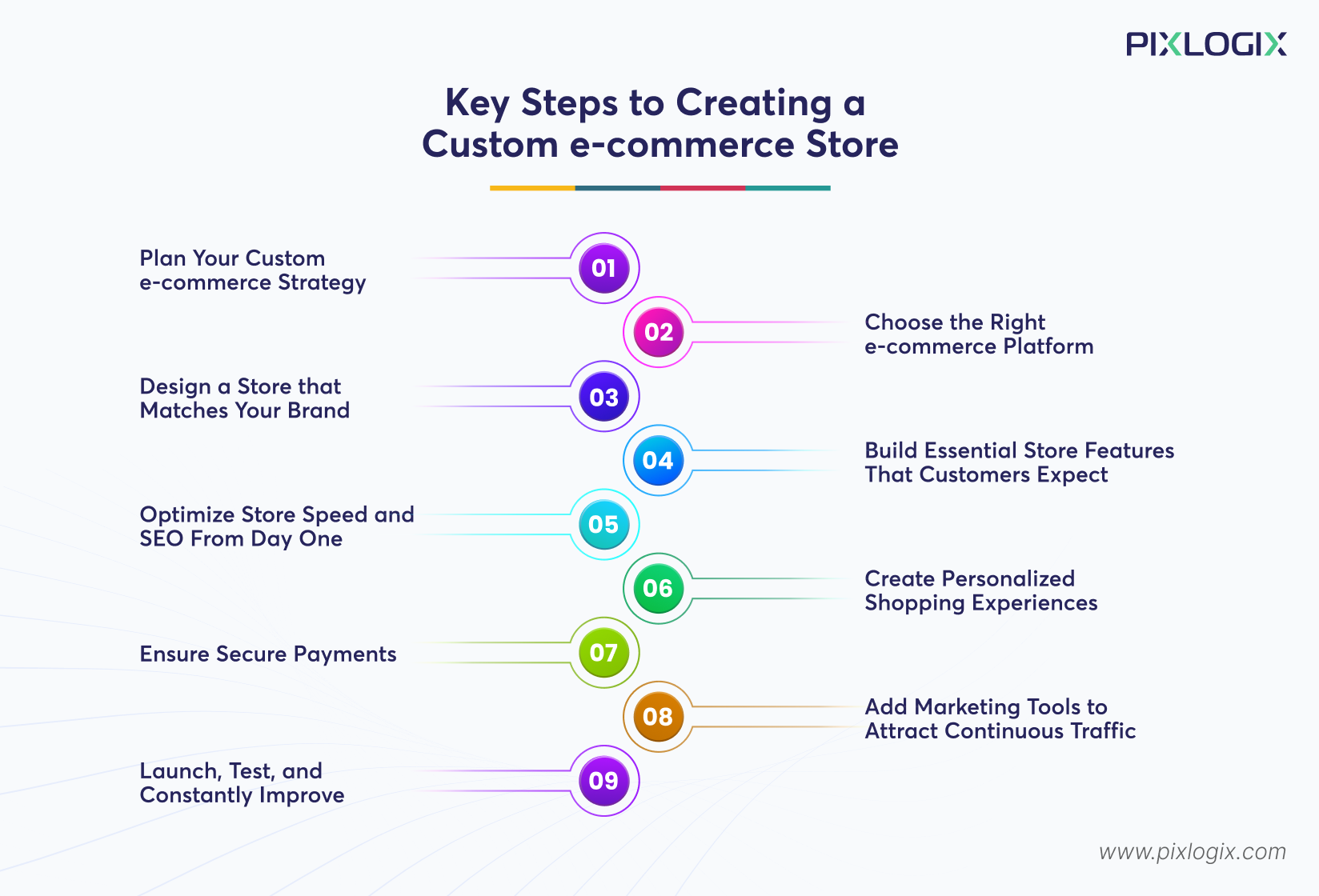
Building a personalized e-commerce store isn’t that easy. From planning a custom strategy to designing and testing, every detail matters. Take a look at these proven strategies that drive traffic and boost conversions:
1. Plan Your Custom e-commerce Strategy
Begin by defining your technical and business objectives. Remember–every custom e-commerce development project starts with clarity.
- Find your target audience and map their journeys. Use Hotjar and Figma to watch real user interactions.
- Then, align your UI/UX design choices with real metrics. They are bounce rate, session time, and conversion rate.
- Now, choose the right technology based on your outlined requirements. Consider these tools:
MERN or MEAN (popular frameworks for fast, scalable builds).
JAMstack (a modern approach for lightweight performance).
- Conduct technical feasibility analysis to test and validate APIs before integration. Every e-commerce development company in India uses Postman and Swagger-like tools. It will help you check if your APIs work correctly.
For example, a startup used JAMstack and Vercel for its website. Result–40% faster load time and 35% lower hosting cost.
Quick Takeaway: Develop a tailored e-commerce strategy based on what your users need.
Pro Tip: Always document your API dependencies. In addition, file your data flows and integration points early. This approach reduces performance bottlenecks.
2. Choose the Right e-commerce Platform
Your e-commerce platform shapes performance, scalability, and cost. It’s the core of your custom online store development strategy. So, choose the right backend and frontend setup for your website.
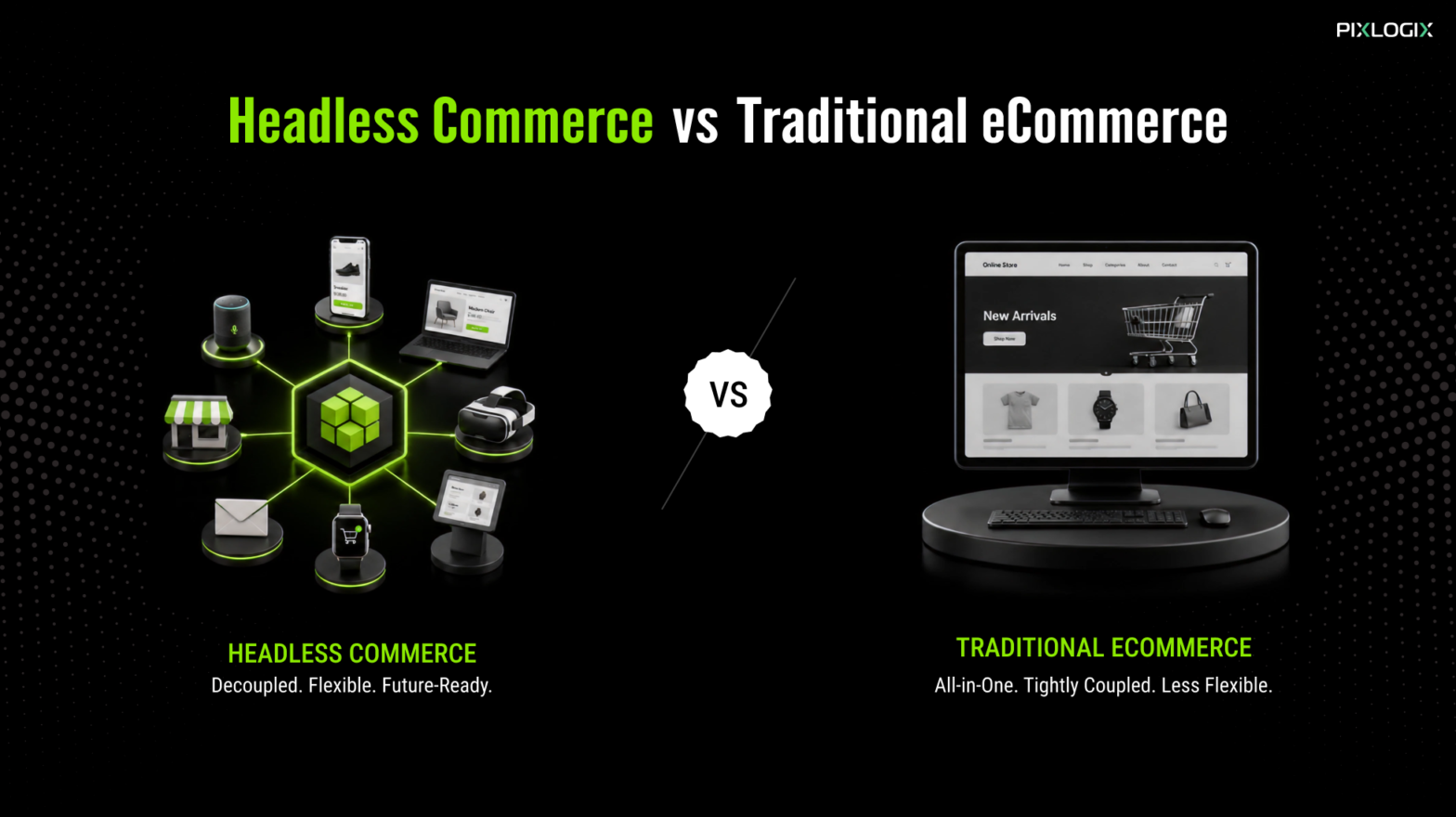
- Headless Commerce: Try combining React.js or Next.js with APIs from Shopify. This means the frontend and backend work separately for speed and flexibility.
- Open Source Platforms: Prefer Magento or WooCommerce for hands-on control. These platforms offer full code-level access. It is perfect for developers who love customizing every detail.
- Custom Frameworks: Laravel, Django, or Express.js enable full-stack customization. It also enables unique feature building.
Selecting the right stack simplifies e-commerce store optimization, which makes your store future-ready. Recently, Nike adopted a headless setup using React and Node.js. It helped them achieve faster page loads and more personalized experiences across markets.
Quick Takeaway: Pick a platform that supports flexibility and API scalability. Also, ensure it promotes future growth.
Pro Tip: Always choose a platform that supports scalable APIs and modular integrations. It reduces migration issues in the future.
3. Design a Store that Matches Your Brand
A brand-focused e-commerce design reflects your identity. It also delivers technical excellence. Utilize a customer-friendly e-commerce design that drives conversions. Developers should focus on:
- Creating responsive layouts. Consider these frameworks–Tailwind CSS or Bootstrap 5. It will help you create clean, mobile-friendly designs.
- Adding micro-interactions, which enable smoother animations. Framer Motion or Lottie can help you with this process.
- Getting WCAG 2.1 accessibility compliance. Also, use semantic HTML to increase your reach and SEO rating. Also, these guidelines will make your site usable for everyone.
Follow e-commerce website design best practices to reach better results. This includes clear navigation, clean typography, and easy product discovery. Apple has built an online store that combines storytelling with minimal UI. It ensures every detail reinforces trust amongst your customers.
Quick Takeaway: Keep your design clean and responsive to build trust.
Pro Tip: Test your design on multiple devices. For this process, use browser dev tools. And ensure consistent performance everywhere.
4. Build Essential Store Features That Customers Expect
A successful store focuses on usability and smart functionality. Integrate e-commerce website features for success that keep users engaged. Include:
- AI recommendations using TensorFlow or AWS Personalize. These tools show products based on user behavior.
- Instant search with ElasticSearch or Algolia.
- Dynamic pricing through rule-based APIs.
- Headless CMS integration for easy content updates.
These tools help you build custom e-commerce store solutions that scale smoothly. Statistica shows that personalized product suggestions engage more than 30% users daily.
Quick Takeaway: Add interactive features. Also, ensure that it simplifies user actions.
Pro Tip: Always test these features on real users before launch. It helps you spot errors in the early stage.
5. Optimize Store Speed and SEO From Day One
Speed directly affects sales. Just a single second of lag can cause about a 7% dip in conversions. An effective e-commerce store optimization can navigate these issues.
- Use SSR with Next.js. This server-side rendering improves speed and SEO.
- Add lazy loading, code splitting, and CDN caching.
- Include schema markups and meta tags in your SEO.
Quick Takeaway: Keep your site fast. Strong speed and SEO get you more conversions.
Pro Tip: Track speed by adding Google Lighthouse to your pipeline. And keep every image size under 200KB.
6. Create Personalized Shopping Experiences
Personalization builds loyalty. Use custom e-commerce store solutions that adapt to user behavior in real time. Integrate tools like:
- Segment or Mixpanel for behavioral analytics.
- Optimizely or Dynamic Yield for personalized content.
- Dialogflow or Rasa chatbots for instant support.
These features attract more e-commerce customers and improve engagement. McKinsey stated that personalized product pages can increase revenue by 15-20%. That’s another core pillar of e-commerce conversion optimization.
For example, Amazon’s recommendation engine drives over 35% of its total revenue. This proves the power of personalization.
Quick Takeaway: Personalization helps you connect with users and boost conversions.
Pro Tip: Cache personalized recommendations to increase page load times.
7. Ensure Secure Payments
Security defines customer trust. Build your custom e-commerce development with strong encryption and verified gateways. For preventing data breaches:
- Prefer compliant-ready platforms, such as Razorpay and Braintree. These are secure payment gateways.
- Enable tokenization and multi-factor authentication. These are the extra steps that protect your user data.
- Integrate shipping APIs for real-time tracking. Take help from FedEx, Shippo, or EasyPost.
If you’re running a global store, automate tax and currency calculations. Make use of modern technologies like Avalara APIs and Open Exchange Rates.
Quick Takeaway: Secure payments protect users and boost trust.
Pro Tip: Conduct vulnerability tests at regular intervals. This keeps your checkout process secure.
8. Add Marketing Tools to Attract Continuous Traffic
Marketing tools help your store grow beyond the launch phase. It integrates analytics and automation into your system. Choose:
- HubSpot or Mailchimp APIs for email marketing.
- Meta SDK or Pinterest API for social selling.
- Google Tag Manager and GA4 for advanced tracking.
Combine these with strong SEO for e-commerce websites to drive good results. And conduct regular A/B testing to see how to improve e-commerce sales effectively.
For example, H&M integrates GA4 triggers to send targeted campaigns. This approach improved their re-engagement rates.
Quick Takeaway: Smart marketing tools help drive more traffic.
Pro Tip: Start with small automation workflows. This prevents errors and helps you scale your marketing efforts smoothly.
9. Launch, Test, and Constantly Improve
Setting up your site is just the beginning. You need to conduct regular tests to deliver lasting results. Just follow these steps:
- Using Google Optimize to run tests.
- Automate regression and deployments. Popular tools like Jenkins and GitHub Actions simplify this process.
- Track measurable KPIs.
Suppose you want to develop a high-performing store that can scale, then consider hiring dedicated e-commerce developers to support your project.
Quick Takeaway: Continuous testing keeps your store stable and scalable.
Pro Tip: Run small test cycles first. It helps you catch issues early and speeds up future improvements.
Conclusion
These days, building a custom e-commerce store design that converts is not that easy. It must include both creativity and technical precision. And developers must balance speed, security, and performance. From choosing a platform to optimizing its speed, every detail matters. Baymard Institute recently stated that fast-loading stores retain almost 60% more customers.
So, select a design that delivers a seamless user experience. Also, apply modern-day SEO strategies to improve ranking and visibility. Overall, ensure that your store attracts and engages users in a better way.
Want to create a future-ready online store? Then partner with a trusted e-commerce website development company in India like us. At Pixlogix, we offer custom e-commerce development services that drive measurable results. We help brands build future-ready shops that engage and attract more e-commerce customers. Contact us today to create your next digital success story.


Written by Samir Bhimbha Founder & CEO
Samir Bhimbha is the Founder & CEO of Pixlogix Infotech Pvt. Ltd. which offers web and app solutions to fulfill business's online needs and help to improve their online presence with many clients in the USA, Europe, Australia, and more. He is a skilled entrepreneur, web designer, developer, and team leader who can handle every situation. With 15+ years of experience in UX/UI design and web development, he is leading a team of IT professional talents.
Related Post
Headless Commerce vs Traditional E-commerce

Get in Touch Now!
Have a word with our expert consultants about your next project to get suggestive guidance & proposal.
Sales Inquiry


HR Inquiry
 India’s First SOTD Winner on Awwwards.com – 2010