

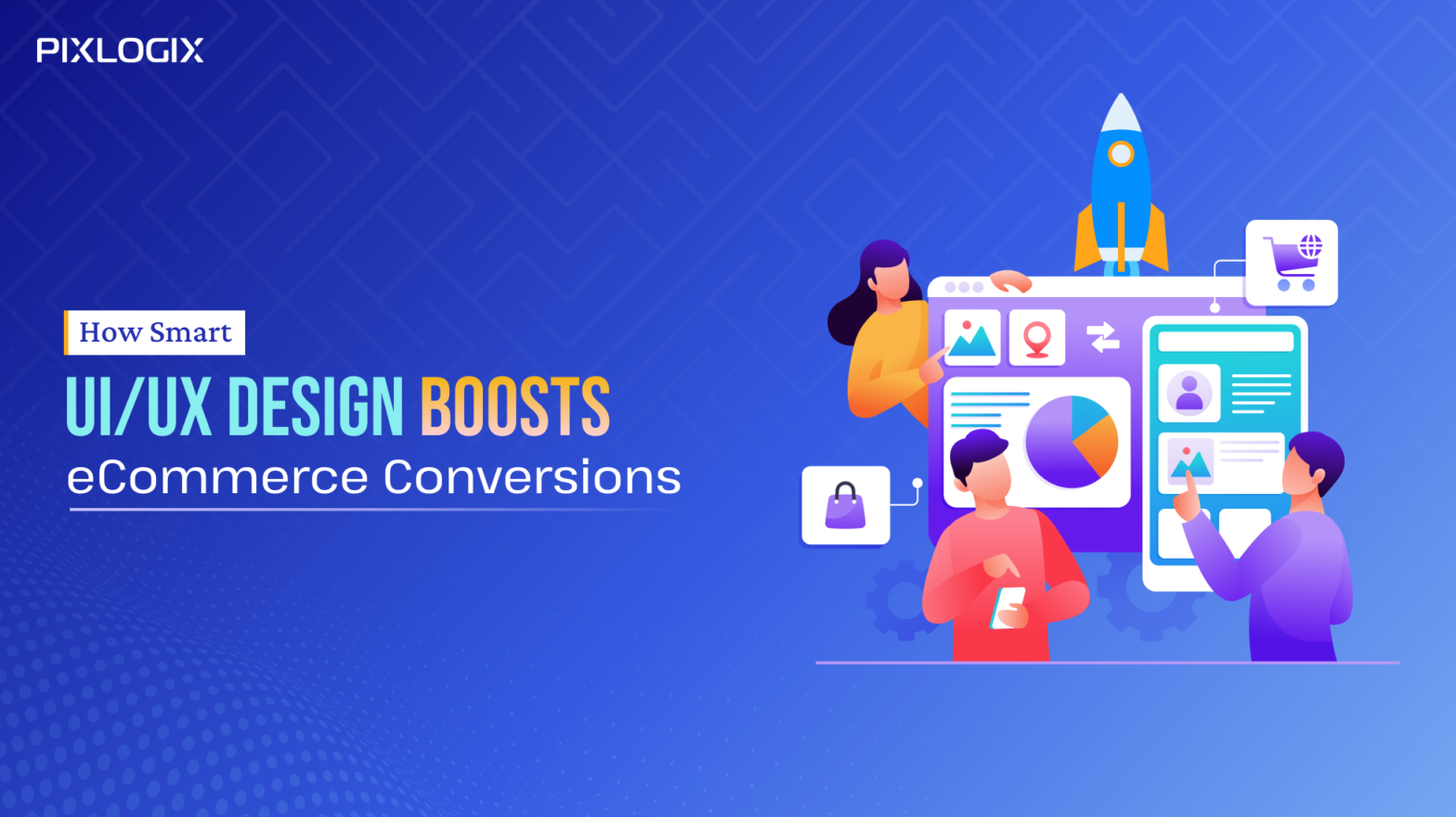
Imagine–you’re visiting an online store to buy your favorite product. But you feel that the website’s layout was confusing and the checkout process mimicked a puzzle. What would you do? You’ll leave the site and have no reason ever to return. The 2024 UX industry report stated that 88% of online shoppers avoid a website that’s not easy to use. This is how e-commerce UX and UI design significantly impact revenue.
Traditional e-commerce conversion optimization strategies fail to match modern user expectations. Because shoppers today expect clarity. They want speed, simplicity, and confidence at each click. When navigation is smooth, search feels effortless, and conversions rise naturally. Meanwhile, when the experience is frustrating, trust breaks, and revenue disappears. That’s why smart eCommerce UI design and thoughtful eCommerce UX design are no longer “nice to have.” They’re business essentials.
Businesses that master UI/UX for online stores are consistently outperforming their 2025 competitors. Not just by increasing advertising budgets, but by improving experience efficiency.
In this blog, we’ll explore how smart UI/UX design decisions boost e-commerce conversions. We’ll also see the core principles, e-commerce best practices, and real case studies in detail. By the end, you’ll have the confidence to select. The best UI/UX design for e-commerce scale conversions rather than sabotaging them.
Why UI/UX Design Matters in eCommerce?
Modern users make decisions in seconds. And if your store feels confusing or slow, they leave often for good. That’s why UI and UX have shifted from “design choices” to revenue-driving priorities. Let’s see the benefits of strong eCommerce UI/UX design:
Higher conversions
Smooth navigation improves the shopping experience. While clear CTAs guide users effortlessly, from product discovery to checkout.
Reduced bounce rates
Intuitive layouts keep users engaged. And fast load times ensure they retain for a long time.
Increased customer trust
Clean visuals create a safe space for users. Meanwhile, predictable interactions give confidence to buy.
Improved repeat purchases
A smooth buying experience motivates customers to return.
Better ROI on marketing
Every visitor becomes more valuable when the website converts traffic efficiently instead of losing it.
Takeaway: Modern e-commerce success isn’t about making a store look “nice.” The shop must build trust.
Key UI/UX Principles That Boost Conversions

An effective UI/UX design simplifies user journeys. It’s because of their intuitive navigation and design elements. Top companies often use this approach to drive engagement. It also helped them convert their one-time visitors into loyal customers.
Here’s what to do:
Easy to Understand & Effortless to Use
A clean interface reduces friction. It also guides users smoothly from interest to action. In 2024, Baymard Institute revealed a true insight. They say nearly 70% of users abandon their carts that carry a complex checkout process. But a structured and simple UX (user experience) can reduce this figure instantly.
Trust & Credibility
A refined UI instantly communicates credibility. Take Amazon’s one-click checkout as an example. Its effortless flow tells shoppers the brand is reliable and in control. People naturally trust online stores that make their experience feel smooth and priority-driven.
Mobile‑First Experience
Statista revealed– mobile users drive 60% of web traffic. This shows the need for a mobile first UX design. Remember, poor e-commerce conversion optimization frustrates users and drives them away.
Speed & Performance
Quick-loading pages drive more sales. For example, Walmart reduced page load time by 1 second. This increased conversions by 2%.
Personalization
Customized recommendations make users feel valued. And adaptive interfaces engage them better, increasing conversion rates. For example, Netflix recently personalised their content suggestions to boost retention.
Takeaway: Removes friction in your UI/UX design, which makes buying effortless. This builds confidence at every step.
UX Psychology: Designing for Human Behaviour
Great UI/UX is all about understanding user decisions. When a website aligns with human psychology, users move effortlessly. It’s because the experience feels natural and rewarding.
The Brain Seeks Simplicity
People avoid mental strain. Clear layouts and well-structured checkout paths reduce cognitive load. This allows users to make decisions quickly.
Predictability Builds Comfort
Users gravitate toward interfaces that behave the way they expect. Familiar patterns, such as the cart icon in the top right or filters on the left, often reduce confusion. This increases user confidence throughout the shopping journey.
The Power of Instant Feedback
Micro-interactions reassure users with button animations and hover cues. Business leaders gather and use this immediate feedback to prevent frustration or chaos.
Loss Aversion Drives Quicker Decisions
Missing out often hurts users. So, businesses give low-stock alerts and limited-time offers to hook them. That’s why scarcity nudges people to hit “checkout.”
Emotion Shapes Memory
Experiences that spark positive emotion often keep users coming back. This includes personalized recommendations and delightful animations. When customers enjoy using a website, they remember and return.
Takeaway: Great digital experiences work with how people actually behave. When that happens, barriers dissolve, and motivation rises.
Case Studies: Brands Winning with Smart Design
Real results speak louder than theory. So, top brands didn’t just redesign. They restructure their e-commerce UX to grab user attention.
1. Amazon: Checkout Simplification For Higher Conversions
Amazon’s most impactful UX win came from removing friction. They introduced One-Click Checkout and reduced form fields. This shortened the buying journey dramatically. The result? Faster decision-making, fewer drop-offs, and a sharp rise in repeat purchases. This is what happens when you choose effortless action over unnecessary steps.
2. ASOS: Mobile-First Design That Eliminates Friction
ASOS recognized that most of its audience shops on mobile–and redesigned accordingly. Features like thumb-friendly navigation and quick-save options made browsing smooth even on small screens. The outcome was a measurable drop in cart abandonment. This proves the value of designing for real user context, not desktop assumptions.
3. Nike: Personalization That Feels Human
Nike’s 2024 UX revamp shifted its focus to personalized product discovery. This helped them send recommendations to user based on their own behaviour. Nike’s interactive product preview helped them explore items with less effort. As a result, shoppers found the right products faster with minimal friction. This increases mobile revenue and retention.
Common UI/UX Mistakes That Hurt Conversions

Sometimes, strong brands may have weak UI/UX. Here is how to avoid it:
Feature Overload:
Packing screens with too many buttons, banners, or options creates confusion rather than value. Simple designs bring clarity.
Poor Mobile Adaptation:
If the mobile experience is not good. You’ll instantly lose a massive share of shoppers.
No User Testing:
Making assumptions is too risky. Don’t deploy without proper testing. Consider feedback and iteration at every design decision.
Slow Loading Speeds:
The Google 2024 reports stated these insights. Conversions drop by 7% if users face a 1-second delay. That’s why image optimization and caching are essential.
Takeaway: UX mistakes bring conversion loss. So, fix the friction–clutter, slow load times, and poor mobile experience at first.
How to Get Started with Smart UI/UX Improvements?
Ready to stop losing conversions? And turn clicks into revenue? Follow this roadmap:
Audit Your Current Design
Make use of tools like Google Analytics for evaluating your design. It identifies high-bounce pages and friction points that are not good.
Hire a Reputable Agency
Choose a reliable e-commerce development company in India. They can help you improve your UI/UX for online stores, uplifting conversion rates.
Set Clear Goals
Define measurable KPIs that boost eCommerce sales. Also, ensure they help you increase sign-ups and reduce cart abandonment.
Test and Iterate
Launch your new design and continuously monitor its performance. Later, gather user feedback and optimize for maximum conversions.
Takeaway: Businesses team up with a professional UI/UX agency for end-to-end transformation. They offer high-grade UI/UX design services in India that help you improve both design and functionality.
Conclusion
Smart UI/UX drives e-commerce success. A simplified user journey can hook casual visitors and make them stay. Similarly, trusted, responsive, and well-structured designs often leap forward. Case studies from Amazon and Nike proved the need for clarity, speed, and optimization. Overall, 2025’s digital marketplace is quite noisy. But brands that deliver a seamless experience often outperform here. So, treat UI/UX as a strategic decision to drive conversion from every click.
Tired of losing potential customers at checkout? Then it’s time to team up with a leading UI/UX design company in India like Pixlogix. Our agile team designs smart, conversion‑driven experiences that simplify journeys and build trust. We deliver high‑grade UI/UX services in India that make every interaction effortless. Contact us today to boost confidence, accelerate checkout, and turn casual browsers into loyal advocates.


Written by Samir Bhimbha Founder & CEO
Samir Bhimbha is the Founder & CEO of Pixlogix Infotech Pvt. Ltd. which offers web and app solutions to fulfill business's online needs and help to improve their online presence with many clients in the USA, Europe, Australia, and more. He is a skilled entrepreneur, web designer, developer, and team leader who can handle every situation. With 15+ years of experience in UX/UI design and web development, he is leading a team of IT professional talents.
Related Post

Top Web Design Trends to Watch in 2026
Why Every Digital Product Needs a UI/UX Design Strategy

Get in Touch Now!
Have a word with our expert consultants about your next project to get suggestive guidance & proposal.
Sales Inquiry


HR Inquiry
 India’s First SOTD Winner on Awwwards.com – 2010
