

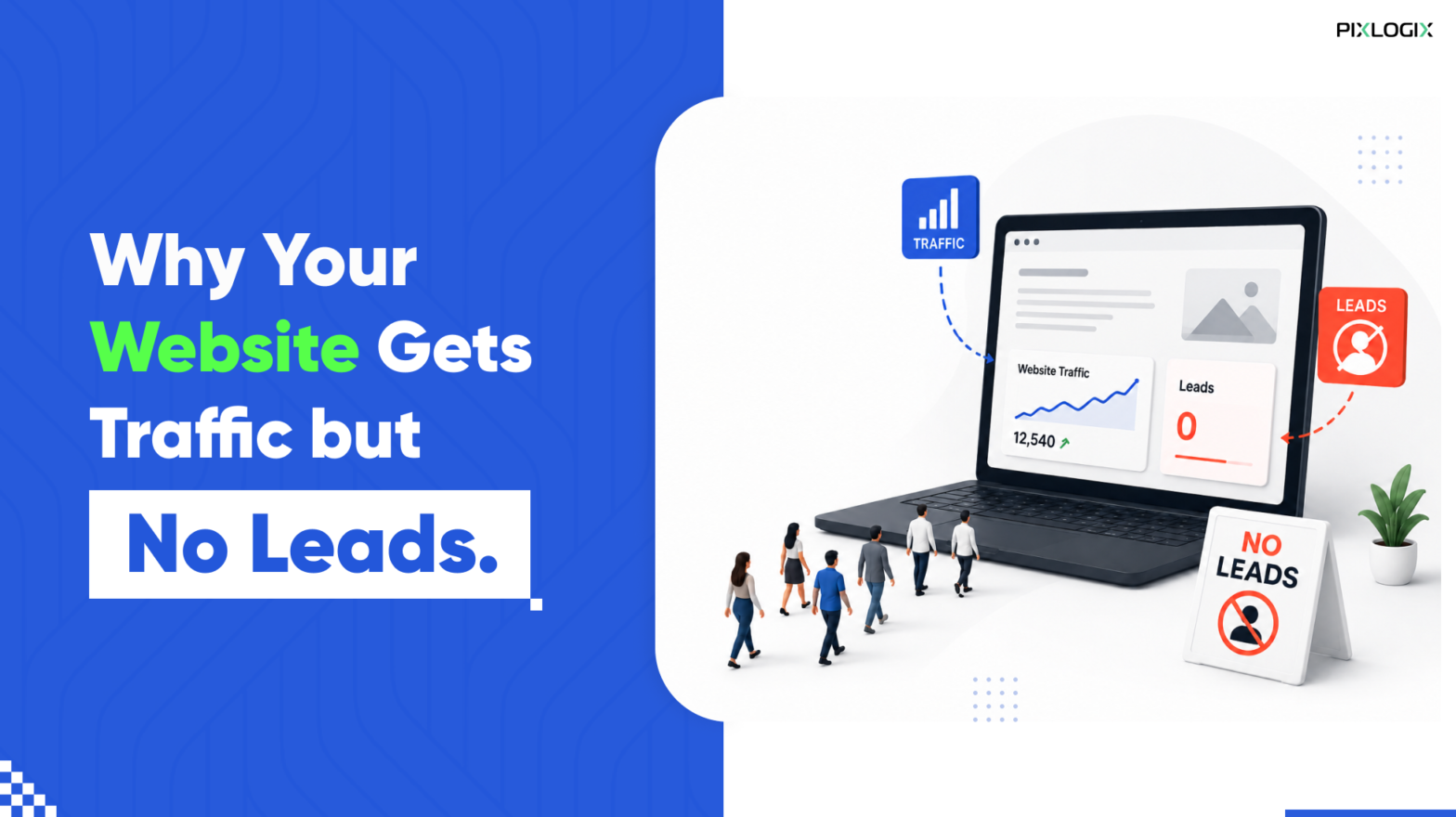
Your analytics dashboard looks healthy. Sessions are climbing, keywords are ranking, and your bounce rate isn’t terrible. Yet your inbox stays quiet. This frustration in digital marketing is why you’ll get website traffic but no leads.
The gap is huge now. To find the reason, Ahrefs examined 300,000 keywords using Google Search Console data. They found some interesting results. When an AI Overview appears above the organic results, the top-ranking page’s click-through rate runs roughly 58%. This is lower than it would without one. That means the visitors who do reach your site are a smaller, more filtered group than they were two years ago. Also, they arrive with less patience for friction. If your site can’t convert that smaller group, it leads to a website conversion problem.
Want to know the root cause of these issues? This blog breaks down exactly that point to help you understand: why your website is not generating leads. It entails real 2026 benchmarks rather than guesswork. By the end, you’ll know what to fix first for generating more leads.
Why Your Website Get Traffic but No Leads?
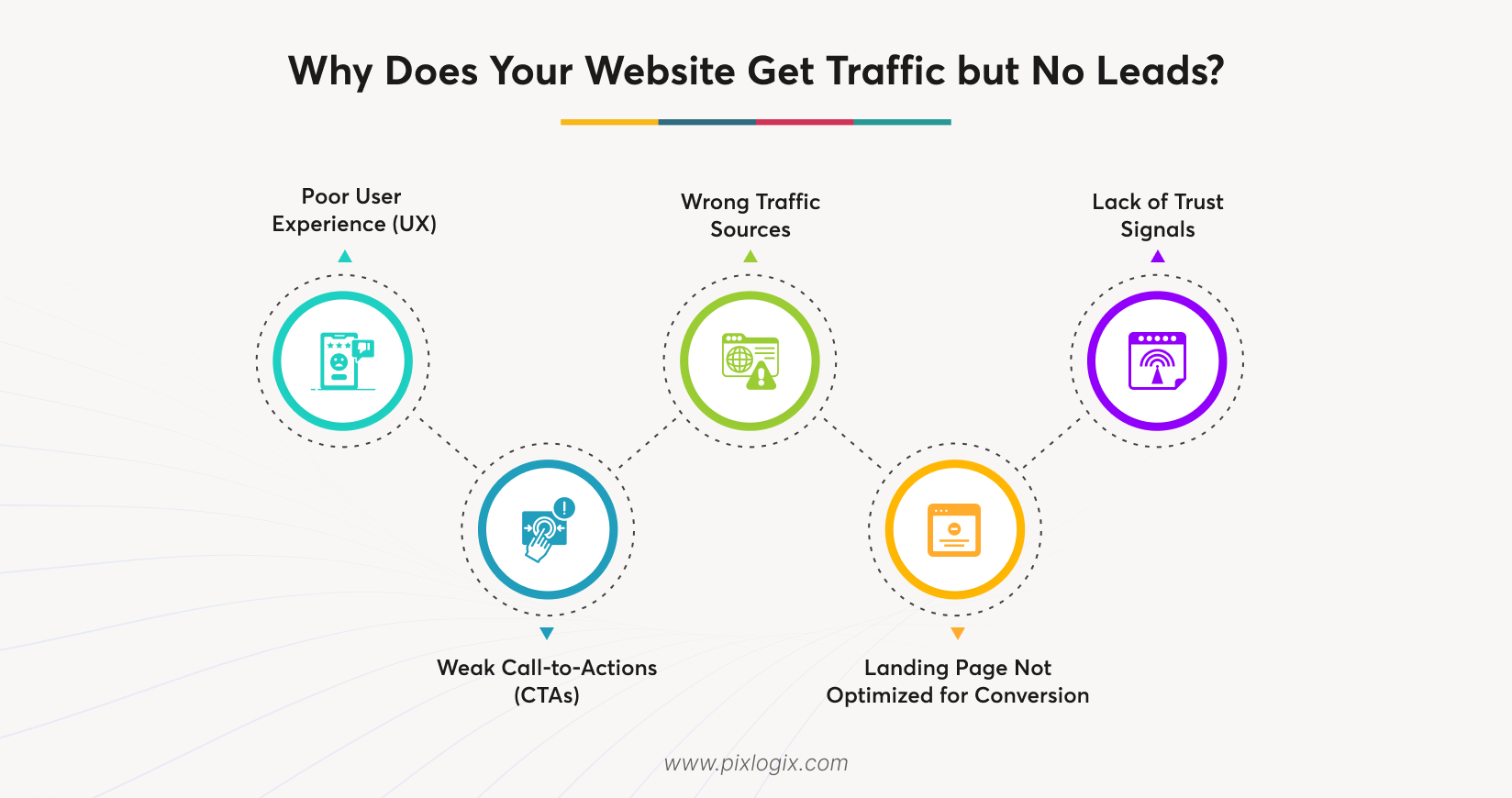
Before fixing anything, understand the trigger points. Most website lead generation issues stem from simple problems that went unnoticed until conversions begin to decline. Take a look at them:
Poor User Experience (UX)
Users decide fast. They take only seconds to decide whether to stay or leave. Slow-loading pages create big barriers. From cluttered layouts to inconsistent mobile experience, all affect the engagement rate. This is why your website is not generating leads. A poor user experience also makes it difficult for visitors to complete an enquiry, turning opportunity into lost conversions.
Weak Call-to-Actions (CTAs)
A button labelled “Submit” gives no reason to click. Instead, personalized, benefit-driven CTAs consistently outperform generic ones in split tests. Placement matters too. Shorter pages convert because they have one clear CTA above the fold. Meanwhile, complex sites need multiple scroll points.
Wrong Traffic Sources
Not every visitor is a customer. Many arrive seeking quick answers or general information without any intention of buying. When their search intent doesn’t align with your products or services, numbers rise. But enquiries remain low. Because those visitors were never looking for your solution. Thus, the traffic looks impressive. But they deliver little real business value.
Landing Page Not Optimized for Conversion
A visitor clicks with intent. They expect to find a specific solution, offer, or piece of information, but when the landing page doesn’t match that expectation, confusion creates website lead generation issues. Clarity drives action. Users spend more time figuring out where to go next than evaluating your offering, and many leave before completing a form or contacting your business.
Lack of Trust Signals
Confidence drives conversion. Visitors naturally question whether a business is credible before sharing their contact details or making an inquiry. That’s where trust signals are essential. If testimonials, case studies, and client success stories are missing, the website conversion problem rises. Risk feels too high. Rather than taking a chance, many visitors leave to compare businesses that provide stronger evidence of reliability.
How to Convert Traffic Into Leads?
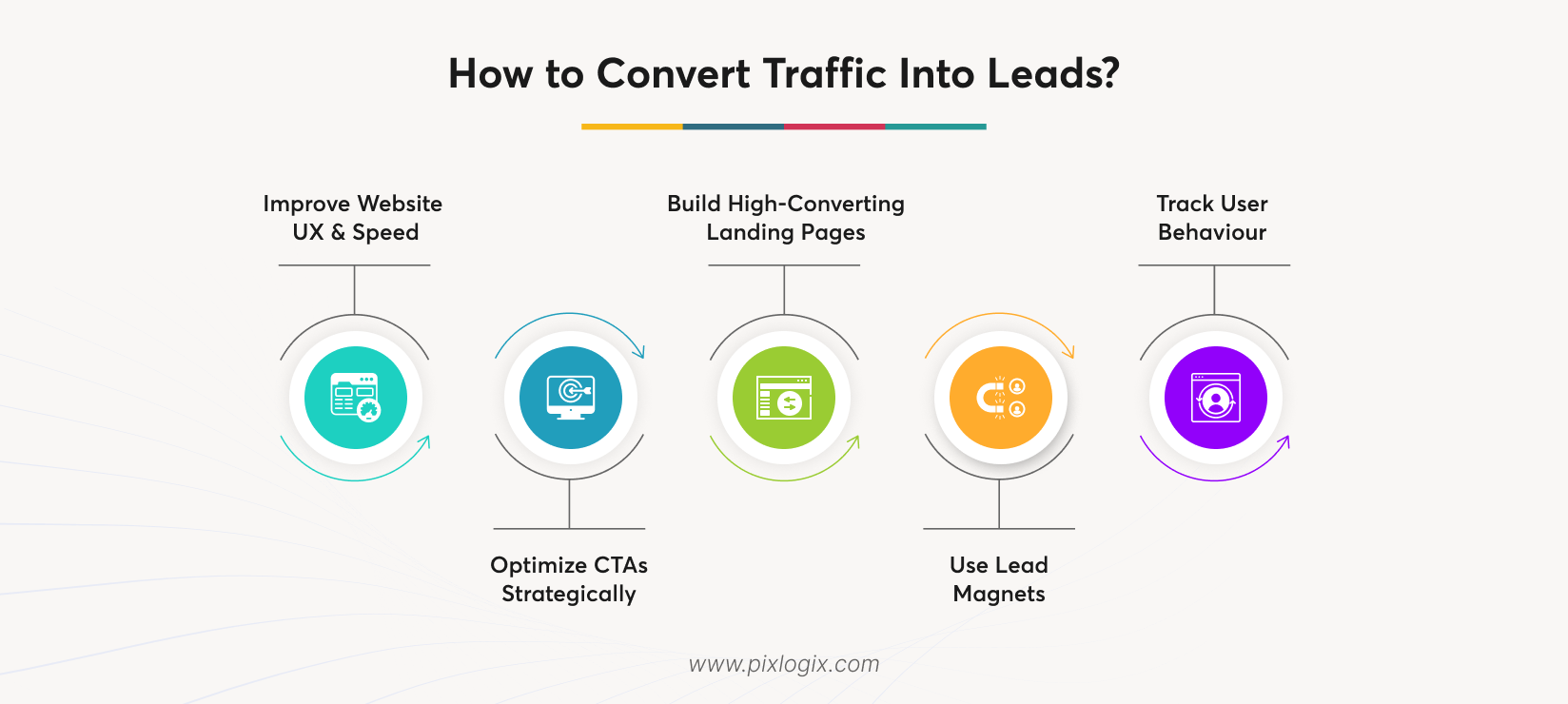
Once you find the root cause, it’s easy to increase the conversion rate. Here’s how to turn passive visitors into active leads.
Improve Website UX & Speed
Reduce friction, raise conversions. When visitors can quickly find information, navigate between pages without confusion, and complete forms without delays, they stay engaged. Ease keeps them focused. A seamless browsing experience ensures users spend their time effectively, converting them into qualified leads.
Optimize CTAs Strategically
Replace vague buttons fast. Use action‑driven, benefit‑focused CTAs like “Get Your Free Website Audit” or “Talk to an Expert Today”. Also, place them at multiple points in the page instead of hiding them at the end. Visibility matters. So, differentiate words and lines using colors and spacing; also run A/B tests on them. It reveals what resonates with your specific audience.
Build High-Converting Landing Pages
Every campaign needs focus. Each deserves its own landing page tailored to a single goal, with a sharp message and clear headline. Also, ensure it aligns exactly with user clicks. Intent drives conversions. A landing page that mirrors the visitor’s original expectation performs better.
Use Lead Magnets
Free resources build trust. Checklists, templates, and e-books give visitors a clear reason to share their contact information. Lead magnets need focus. They work best when solving a small, specific problem tied directly to your core service. This gives visitors immediate value while positioning your expertise.
Track User Behavior
Track behavior, not guesses. Use heatmaps, session recordings, and funnel analysis to see where visitors drop off. It reveals their scroll‑depth and click‑patterns. Data exposes friction. This evidence‑driven approach helps you fix the real problem areas instead of guessing what might be wrong.
Role of SEO & Web Design in Lead Generation
SEO attracts. It brings the right-target people who are searching for your products or services, increasing qualified lead generation. SEO helps optimize your site with relevant keywords. This improves search visibility and grabs the attention of qualified prospects.
Web design decides. Visitors often explore sites that are easy to navigate and match their intent. That’s where the best design matters. With well-placed conversion elements, it guides potential buyers without friction.
Together, they complete the cycle. SEO connects your site with the right audience, while design turns them into lasting buyers. Both of them help a site grow over time.
Conclusion
Website traffic means little on its own. If it doesn’t generate enquiries, it’s just numbers on a dashboard. Then, how to turn visitors into leads? Start by building friction-free journeys and intent-driven conversion paths. Include trust at every step. Strong CTAs, trust signals, and consistency reassure safety. They drive more commitment. That’s how it shifts from a passive presence into a dependable source of purchase-ready prospects.
Ready to turn your website into a lead generation engine? Then, partner with a leading website design company in India like Pixlogix. We combine strategic SEO and intuitive web design to help businesses generate more qualified enquiries. Contact us today! Let’s create a scalable website that delivers measurable growth.

Frequently Asked Questions
Can I have the right audience visiting my website and still get no enquiries?
Yes. The right audience can still leave without enquiring if your site has weak calls-to-action. Confusing navigation makes them irritated. Slow load times, unclear messaging, or missing trust signals push them away. Small flaws matter. One broken step in the journey is enough to lose a potential customer.
Why do visitors spend several minutes on my website but never contact me?
Visitors hesitate. They may browse your pages for minutes, but unclear CTA and confusing navigation stop them from reaching out. Friction blocks intent. Without a seamless decision path, visitors spend more time, but they’ll never convert.
What is the biggest mistake businesses make when designing lead generation pages?
Design isn’t the real issue. Attractive layouts without intent-driven messaging or trust signals leave visitors confused. Conversion depends on clarity. Strong calls-to-action and aligned intent turn attention into results.
Can an outdated website design reduce leads even if everything works properly?
Outdated design kills trust. Even if your site works fine, poor visuals and confusing layouts make it look less credible. Visitors also hesitate. An outdated user experience discourages action, reducing leads and enquiries despite proper functionality.
How often should I review my website for lead generation issues?
Audit often. Every three to six months, review your site for usability issues and broken conversion paths that silently erode leads. Stay proactive. Regular updates keep user experience sharp and ensure qualified enquiries keep flowing.

Written by Samir Bhimbha Founder & CEO
Samir Bhimbha is the Founder & CEO of Pixlogix Infotech Pvt. Ltd. which offers web and app solutions to fulfill business's online needs and help to improve their online presence with many clients in the USA, Europe, Australia, and more. He is a skilled entrepreneur, web designer, developer, and team leader who can handle every situation. With 15+ years of experience in UX/UI design and web development, he is leading a team of IT professional talents.
Related Post
Top 10 Signs Your Website Needs Better UI/UX
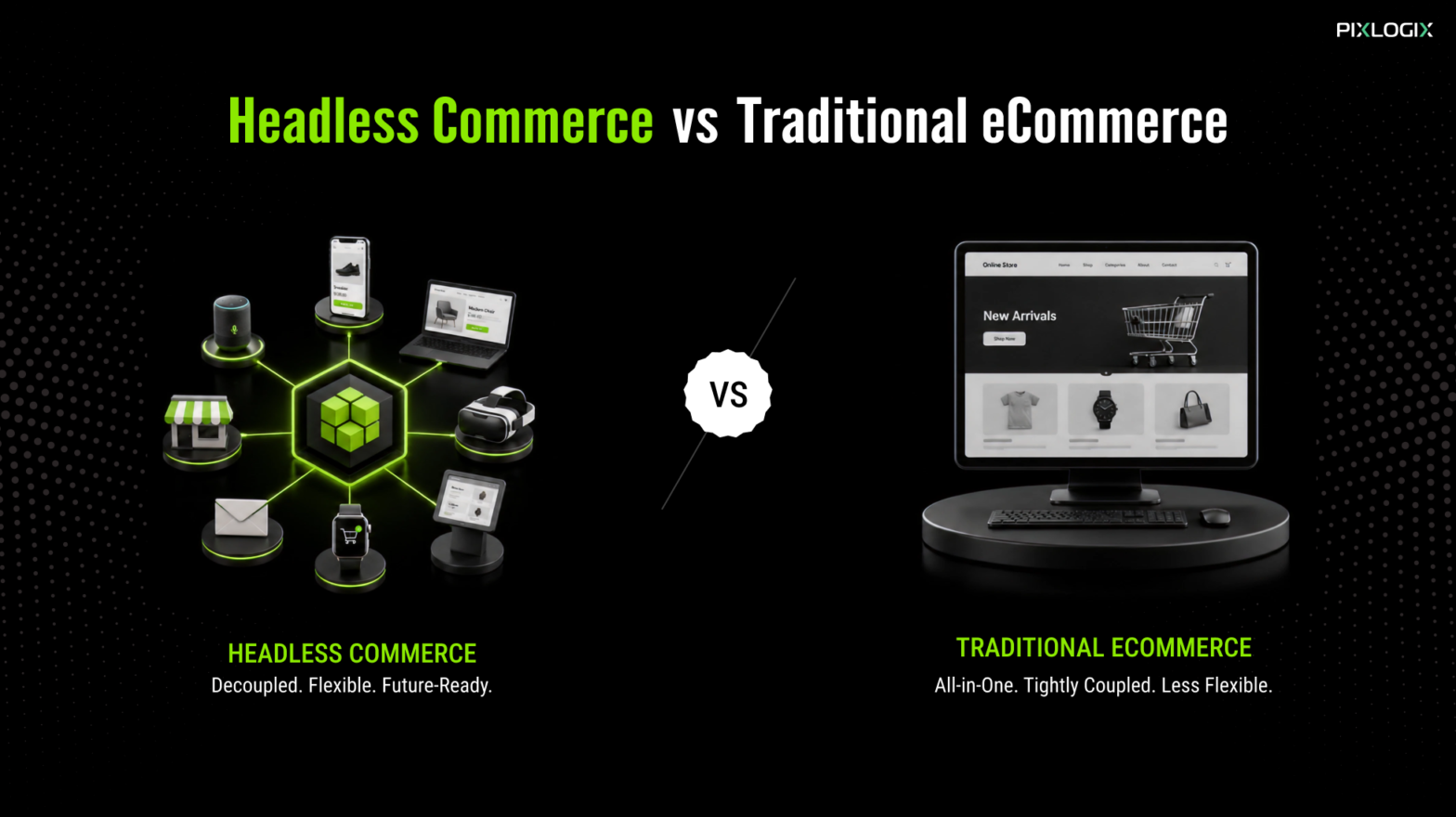
Headless Commerce vs Traditional E-commerce

Get in Touch Now!
Have a word with our expert consultants about your next project to get suggestive guidance & proposal.
Sales Inquiry


HR Inquiry
 India’s First SOTD Winner on Awwwards.com – 2010