

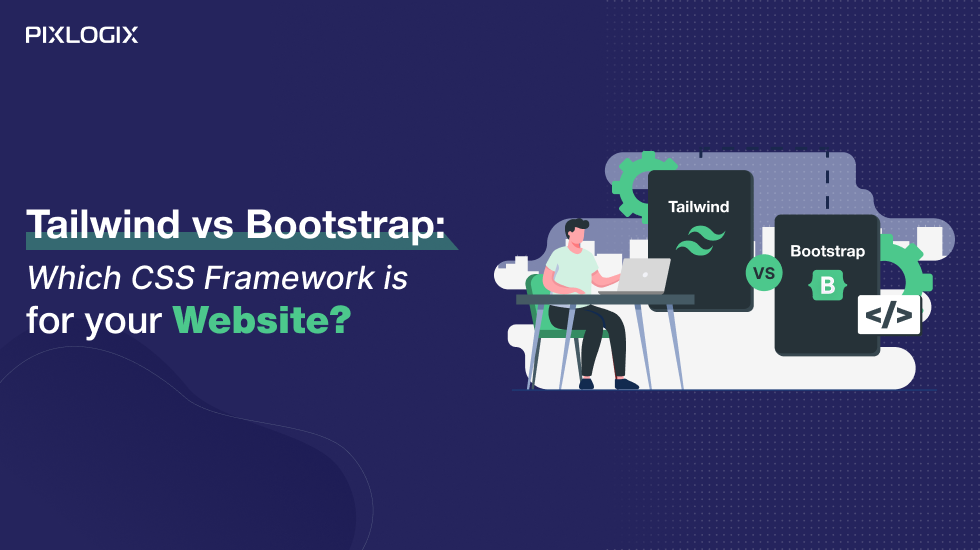
Nearly 88% of digital websites are low-rated because of their poor design. And the CSS framework you pick can impact your site’s speed and user experience. Among the top contenders, Tailwind and Bootstrap are the commonly used web development frameworks. But both of them follow fundamentally different approaches.
According to developers, choosing the right CSS framework for your website is quite a challenging task. If you want to pick the best one, you must understand the difference between Tailwind CSS and Bootstrap.
In simple words, Tailwind personalizes design with low-level style classes. On the other hand, Bootstrap has a ready-made UI component library that fuels responsive designs.
Which is the best CSS framework for websites 2025? This blog uncovers the comparison between Tailwind CSS vs. Bootstrap. In addition, we’ll highlight its key features, performance, and ideal use cases.
What is Tailwind CSS?
Tailwind CSS is a utility-first framework designed to create tailored user interfaces. Adam Wathan and Steve Schoger introduced Tailwind in 2017. It allows developers to access various low-level utility classes like p-4, text-center, or bg-blue-500. These tools let you create responsive and scalable layouts in detail.
Key Features of Tailwind CSS
Utility-First Styling: Tailwind CSS framework allows developers to access a wide range of ready-to-use classes. You can simply combine these classes to design your layout in HTML.
Easy to Customize: With Tailwind web development frameworks, you can customize everything. You can restructure your site’s layout exactly the way you want.
Lightweight by Default: Tailwind auto-cleans the unwanted CSS documents. It trims down the file size, helping your site load faster.
Easy to Integrate: Tailwind CSS works well with other tools. This makes it scalable, fitting perfectly with other tech stacks.
Mobile-First by Design: Tailwind frameworks are always mobile-ready. This makes it perform well on all devices.
Tailwind allows developers to take complete control of the site’s structure and design. It helps them customize everything from scratch.
What is Bootstrap?
Bootstrap is a widely used open-source CSS framework. It was developed in 2011 by some of the team members from Twitter. It uses a component-based approach, allowing developers to build websites faster. They have ready-made elements like buttons, models, carousels, and forms.
Key Features of Bootstrap
Smart Grid System: It uses a flexible 12-column layout that easily adapts to all screen sizes. This feature reduces bounce rates with its organized and responsive site design.
Pre-Configured UI Components: The Bootstrap web development framework includes pre-configured elements—navigation menus, buttons, forms, and alerts. This makes it readily customizable according to design needs.
Mobile-First by Default: It is built with mobile responsiveness in mind. This allows your site to perform well on all devices.
Theming and Customization: Bootstrap has in-built themes in its system. It lets you personalize every part of your site’s design.
Simple Documentation: It is always beginner-friendly and easy to use. And it has numerous tutorials, examples, and templates online.
If you want to create clean, responsive websites without starting from scratch. Then choose Bootstrap.
Core Differences between Tailwind CSS and Bootstrap

While comparing Tailwind CSS vs. Bootstrap performance, both of them are unbeatable. They improve your team’s productivity, site’s performance, and engage users in a better way while reducing bounce rates.
But their functionalities and deliverables vary. Let’s break down the difference between Tailwind vs. Bootstrap, helping you evaluate them.
| Feature | Tailwind CSS | Bootstrap |
|---|---|---|
| Approach | Utility-first – with atomic classes like bg-blue-500, p-4, and text-center. Gives developers full design control from scratch. | Component-first – with pre-styled UI components like .btn-primary or .navbar. Great for rapid development, but less flexible. |
| Setup | Requires building tools like PostCSS, Vite, and Webpack. | Easy to get started. You have to just include the CDN link in your HTML. |
| Customization | Customize everything through simple configuration files | Limited customization unless you override its SCSS variables or write additional styles. |
| Learning Curve | Steeper learning curve, especially for beginners. Understanding utility classes and managing long class lists takes practice. | Easier to learn. Ready-to-use components and consistent class naming help speed up the development process. |
| File Size | The JIT compiler generates only the styles used, resulting in minimal CSS size (~10KB in production). | Even minified, Bootstrap adds a larger payload (~150KB including JS and CSS files). |
| HTML Markup | HTML tends to have longer class names, but no need to write additional CSS. | The HTML looks cleaner, but it often needs extra CSS to change the default styles. |
| Use Cases | It is highly used in projects where performance matters. This includes design-heavy websites, SaaS apps, and admin dashboards. | It is suitable for sites that require quick setup. This includes marketing websites, corporate sites, MVPs, and internal tools. |
Analyze this comparison between Tailwind CSS vs. Bootstrap and choose the one based on your unique business goals:
- Need branding flexibility and performance? Go with Tailwind.
- Want to launch fast with a consistent UI? Bootstrap fits better.
Tailwind CSS vs Bootstrap: Choosing the Right Framework for Your Next Project
Finding it hard to pick the right framework? The wrong choice can slow down your project, limit creativity, or bloat your codebase.
Use Tailwind CSS When:
- You want full control over your website’s design and layout.
- You want personalized themes for unique branding.
- You want to build a high-performing solution with minimal CSS.
- You need a simple, lightweight solution that automatically removes unused CSS.
- Your team is comfortable working with utility- first classes.
Use Bootstrap When:
- You want to complete a project faster using pre-built components.
- You seek a consistent and responsive layout without heavy customization.
- Your team prefers working with component-based frameworks.
- You’re building MVPs or admin dashboards where speed matters.
- You want robust documentation and strong community support.
Choose Tailwind CSS if you need flexibility, or Bootstrap if you need speed. The right choice can save you time, money, and redesign-related headaches.
Conclusion
Tailwind and Bootstrap are now reshaping how developers build modern websites. Both these frameworks differ in their unique strengths. Have you ever thought–what’s the best CSS framework for websites in 2025?
Tailwind excels in performance, customization, and scalability. While Bootstrap enhances speed and consistency with minimal learning overhead. Evaluate the difference between Tailwind CSS vs. Bootstrap. And select the best web development services that suit your project’s objective.
Wondering about choosing the right CSS framework for your website? Let’s make it simple. At Pixlogix, our experienced team will guide you through the entire development process. We’ll help your website scale efficiently with your growing business needs. Contact us today to learn more about tailored web development frameworks.


Written by Samir Bhimbha Founder & CEO
Samir Bhimbha is the Founder & CEO of Pixlogix Infotech Pvt. Ltd. which offers web and app solutions to fulfill business's online needs and help to improve their online presence with many clients in the USA, Europe, Australia, and more. He is a skilled entrepreneur, web designer, developer, and team leader who can handle every situation. With 15+ years of experience in UX/UI design and web development, he is leading a team of IT professional talents.
Related Post


Top 10 Signs Your Website Needs Better UI/UX
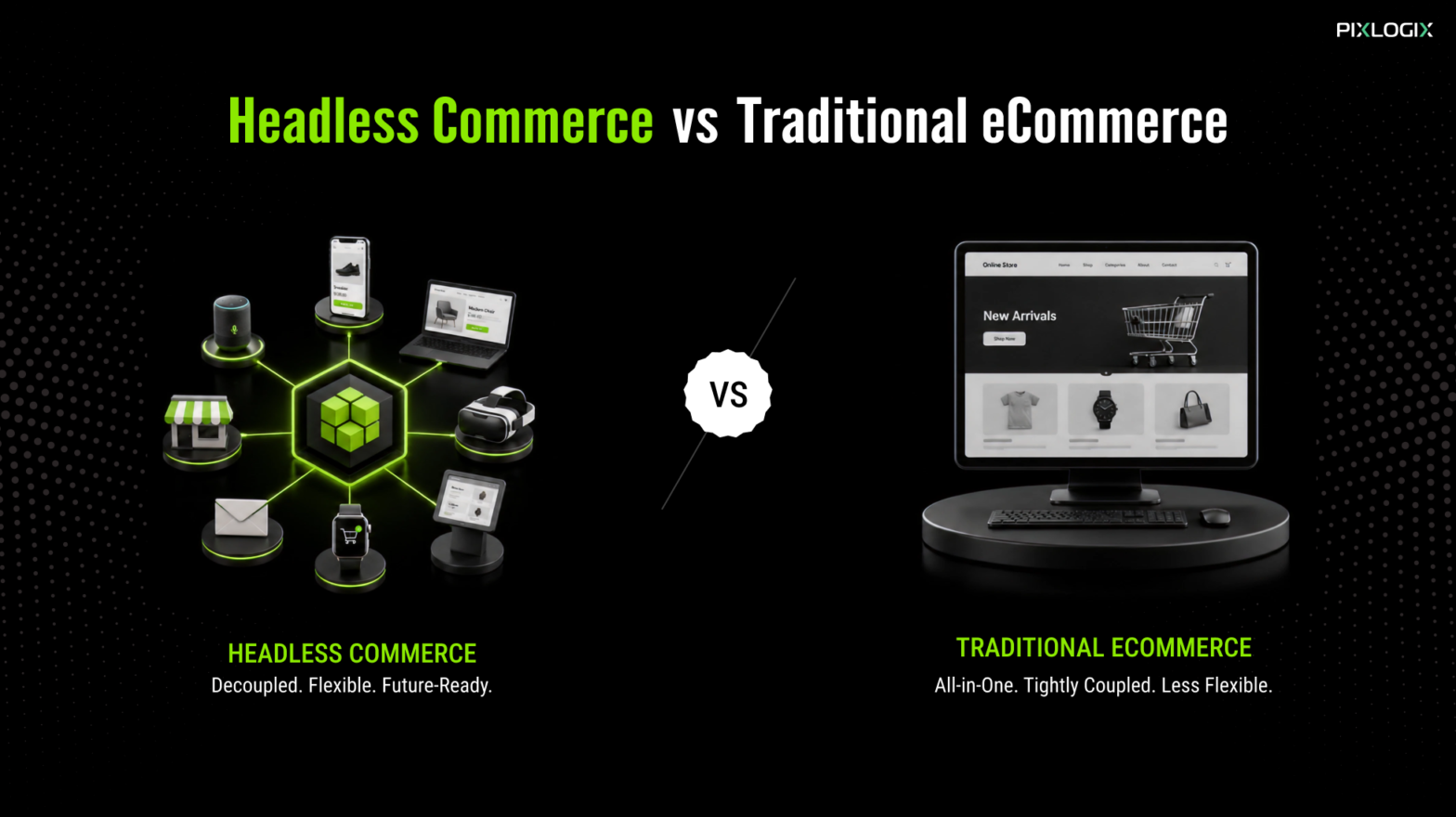
Headless Commerce vs Traditional E-commerce

Get in Touch Now!
Have a word with our expert consultants about your next project to get suggestive guidance & proposal.
Sales Inquiry


HR Inquiry
 India’s First SOTD Winner on Awwwards.com – 2010