

Have you ever thought about how some websites consistently convert while others struggle even with heavy ad spend? The answer doesn’t lie in strong website marketing. But in how effectively your site engages high-intent visitors.
These days, marketing budgets are under pressure. McKinsey’s recent reports highlighted users’ buying behavior in detail. According to that, 70% of B2B buyers today prefer digital self-service. This marks the shift from traditional in-person sales. As a result, website optimization for leads has become a critical lever for growth. Every click, scroll, and interaction should reduce friction and build trust.
In simple terms, landing page optimization for high-intent leads doesn’t require more money. They need smarter design and UX. This reflects the core idea behind intent-based marketing. It means understanding the prospect’s decision journey clearly. And eliminating every obstacle that slows down your growth. With innovative marketing tactics, your website becomes a silent salesperson.
From first interaction to final conversion, every step matters. This includes real-time support, trust placement, and even what happens after a user submits a form.
This blog sheds light on B2B service lead generation strategies that drive real results. Use it for optimizing your website for high-intent leads. By the end, you’ll have the clarity to create a website that converts with impact.
Let’s explore them.
Understand What High-Intent Leads Really Mean
High-intent leads are those who are ready to buy or engage. They are not casual browsers.
For example, imagine a visitor on a B2B service website who downloads a detailed pricing guide. He/She also requests a demo and revisits the contact page multiple times. These actions show clear intent. They’re not just exploring. They’re preparing to make a decision.
High-intent leads are already in the decision stage. They are just looking for reassurance before committing. This is where intent-based marketing becomes powerful. So, understand what your visitors or leads expect. And then tailor your site’s content to match their readiness. This is the best strategy to optimize websites for conversions without spending much on ads.
Content That Suits High-Intent Leads:
- Pricing pages with transparent details.
- Case studies and client reviews. It signals credibility.
- Interactive demos or product tours.
- Clear, persuasive CTAs. Also, ensure they are aligned with buyer intent.
- Secure trust signals.
The Takeaway: High-intent leads are the most valuable prospects. Understanding their signals is the smarter marketing strategy for a website. It drives conversions without extra spend.
Optimize Website Structure for Conversion-First Navigation
Everything starts with a well-structured website. It supports effective B2B service lead generation. When navigation is intuitive, visitors engage longer. And they seamlessly move toward conversion. In fact, research shows that the global average website conversion rate is 3.68%. But top-performing sites achieve rates above 11%. This proves that structure and clarity directly impact results.
Optimizing a website for conversions is more than marketing. It means prioritizing pages that decision-makers value most. The goal is to reduce friction. And making critical information accessible within one or two clicks. Also, choose the best marketing strategy for your website. It helps your navigation adapt to buyer readiness. For example, surfacing demo requests at the time when users are engaged.
How conversion-first navigation content look like?
- Clear service and pricing pages.
- Case studies and testimonials are linked from menus.
- Sticky navigation bars for easy access.
- Prominent CTAs aligned with buyer intent.
- Interactive tools. This includes ROI calculators and demos.
The Takeaway: A conversion-first structure reduces friction. It aligns navigation with buyer intent and leverages innovative tactics. This helps you attract intended leads.
Improve User Experience (UX) to Reduce Drop-Off
User experience optimization is a decisive factor. A poor UX leads to slow load times and confusing layouts. This pushes visitors to abandon your site before converting.
For example, consider a potential client visiting your site to explore pricing. They couldn’t find the pricing page as it is buried under multiple clicks or loads slowly. Now, the visitor drops off and moves to your competitor’s site.
So, ensure that your site follows a streamlined structure with clear CTAs and trust signals. It keeps them exploring and rushes them toward conversion. Adding innovative website marketing tactics also reduces drop-offs. Some of them are interactive demos and personalized lead flows. Add real-time AI chatbots for better engagement. It gives them instant answers. This prevents drop-offs and accelerates decision-making.
Key UX Components
- Fast-loading.
- Mobile-friendly pages.
- Clear navigation with minimal clicks.
- Strategically placed CTAs.
- Trust signals. This includes certifications and social proof.
- Interactive tools that guide decisions.
- Live chat or chatbot support.
The Takeaway: Strong UX reduces drop-off. It keeps high-intent visitors engaged. And doesn’t push them toward competitors.
Use Content Positioning to Attract Buying-Stage Visitors
Content positioning isn’t just about optimization. It’s about presenting relevant content in the right context. So buying-stage visitors can find it instantly and take action. These prospects are already evaluating solutions and need decision-ready information.
The 2025 NetLine’s State of B2B Content Consumption report screwed up the need for strategic positioning. It stated that gated content demand has grown 83.8% since 2020. This includes playbooks and ROI-focused resources. They have the greatest impact on purchase decisions.
For example, a B2B site can use ROI calculators and comparison charts. However, they place it on their service or product pages. This ensures high-intent visitors don’t waste time searching. Instead, it helps them move quickly toward conversion.
Content That Attracts Buying-Stage Visitors:
- ROI calculators and interactive tools.
- Case studies highlighting measurable results.
- Transparent pricing charts.
- Trust indicators.
- Demo requests or free trial CTAs.
Trust indicators should be placed near key decision points. For example, add a testimonial next to a “Request a Demo” form. This reduces last-minute hesitation and improves conversions.
Takeaway: Strategic content positioning is a key growth driver. It ensures that buying-stage visitors instantly access the right content. And delivers ROI-driven information exactly when they need it.
(CRO) Tactics That Don’t Require More Ad Spend
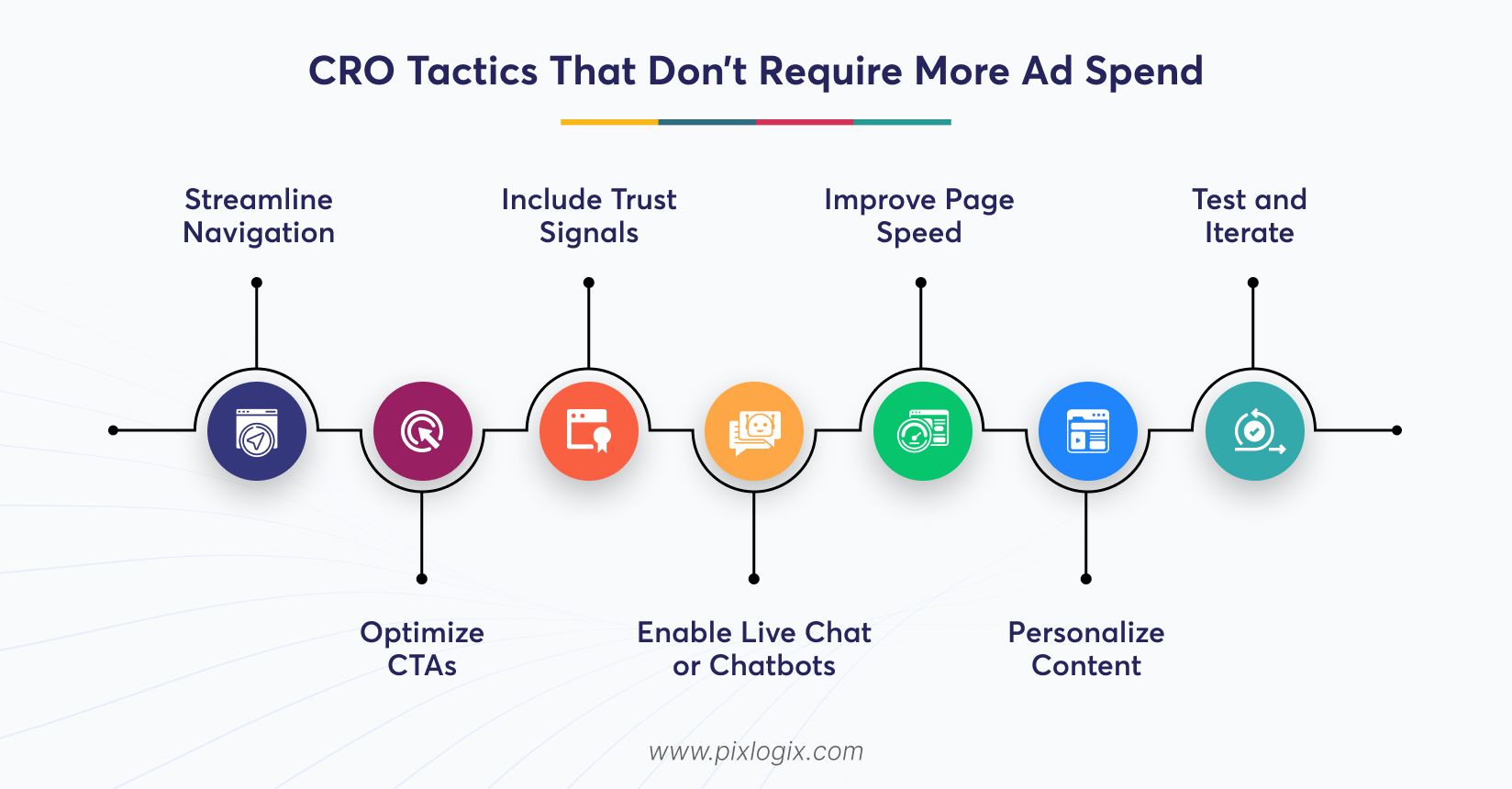
Conversion Rate Optimization (CRO) is often misunderstood as a budget-heavy exercise. They don’t require additional ad spend. Instead, they focus on capturing leads. And improve user experience accordingly.
Proven CRO Tactics
1. Streamline Navigation
Make sure visitors can reach key pages easily. It must happen within one or two clicks. Easy access reduces friction. They also improve conversion chances.
2. Optimize CTAs
Use persuasive calls-to-action. Ensure they match your buyer intent. For example, “Request a Demo”.
3. Include Trust Signals
Add testimonials and secure payment icons. Place them close to high-intent actions like demo forms. They reinforce confidence at the decision stage.
4. Enable Live Chat or Chatbots
High-intent visitors often need quick clarifications. Instant support reduces friction and prevents abandonment.
5. Improve Page Speed
Google reports that page speed and mobile optimization are crucial factors these days. Because slow loading directly impacts conversions.
6. Personalize Content
Use dynamic content blocks. It helps you show relevant case studies or offers based on visitor behavior.
7. Test and Iterate
Consistently assess your A/B test headlines. You can also test the layouts and CTAs. It helps you identify what high-intent visitors expect.
Takeaway: CRO success doesn’t demand bigger budgets. They need refining UX, positioning content strategically, and testing continuously. It lets you capture more leads without extra ad spend.
Technical Optimization That Supports High-Intent Leads
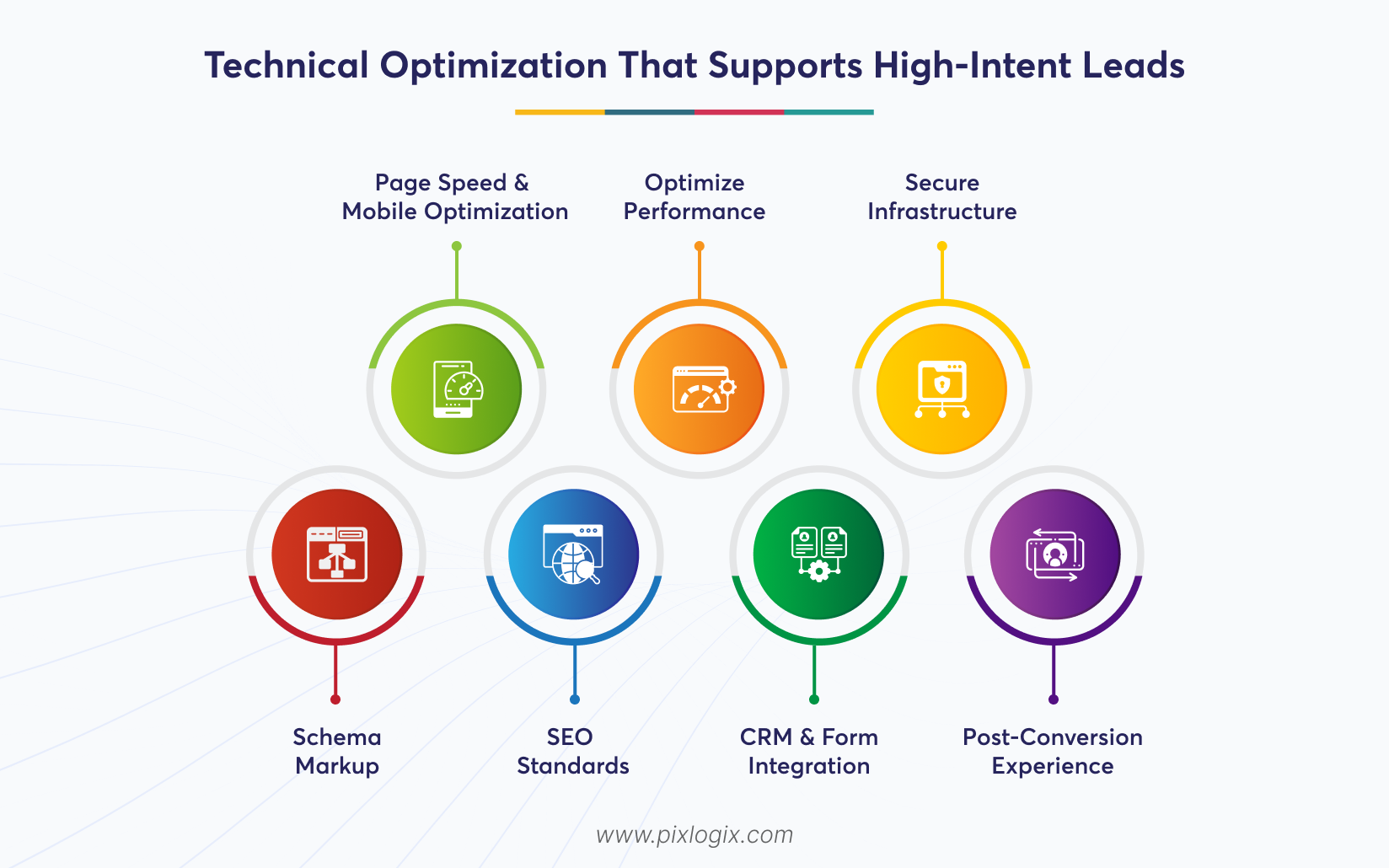
Technical optimization is the invisible engine behind website performance optimization. Your website might have strong content and design. But poor technical performance can cause high-intent visitors to drop off. According to Google’s research, page speed and mobile optimization is crucial for grabbing leads. Because even a one-second delay can reduce conversions by up to 7%.
For example, imagine a prospect comparing solutions on your pricing page. If the page loads slowly, frustration sets in, and they may abandon the process.
Focus on these essential areas:
1. Page speed and mobile optimization
Keep load time under 3 seconds. Compress images and enable caching. Leverage a CDN to distribute your website content more efficiently. It helps you improve speed globally.
2. Optimize Performance
Monitor Core Web Vitals. This is Google’s metrics that measure speed, stability, and responsiveness.
3. Secure infrastructure
Use HTTPS encryption to protect healthcare data and build trust.
4. Schema markup
Add structured data to help search engines understand services. It is also useful for ranking keywords.
5. SEO Standards
Improve your meta titles and descriptions. It helps search engines clearly understand your pages. Keep an updated XML sitemap. So, it becomes easier to discover and index your website.
6. CRM & form integration
Ensure enquiry forms connect directly to your sales system without delays.
7. Post-Conversion Experience
Optimize your thank you page with clear next steps. Include trusted messages and helpful resources. Also, trigger immediate automated follow-ups. For example, emails or calls. This keeps engagement high while intent is still strong.
The Takeaway: When your backend runs flawlessly, high-intent visitors experience zero friction. This makes conversions faster and more consistent.
When to Consider Professional Website Optimization?
Sometimes, internal improvements aren’t enough. Your website traffic may be steady. But if conversions stay low, it’s time to consider professional website optimization.
You should seek expert support if:
- Bounce rate is above 60%.
- The page takes longer than three seconds to load.
- Conversion rates are below industry benchmarks.
- Navigation feels cluttered or confusing.
- Landing pages fail to generate qualified enquiries.
- Technical SEO issues affect your search rankings.
Professional teams offer the best UI/UX design services in India. They conduct UX audits and conversion analysis. For this, they use tools like Google Analytics and heat maps. And they identify friction points that internal teams often overlook. This includes improving real-time engagement tools. Optimizing conversion touch points and refining post-conversion workflows ensures no high-intent lead is lost.
The Takeaway: Professional website optimization is essential to generate high-intent leads. They can turn your existing traffic into measurable revenue growth.
Conclusion
Generating high-intent leads doesn’t require a bigger budget. It requires smarter execution. When you focus on website optimization for leads, you turn existing traffic into lasting customers. When intent-based marketing is aligned with well-structured optimization strategy, your website turns into a consistent lead generator. User experience optimization, CRO, and technical performance further fuel your website growth. From instant chat support to fast loading, every improvement reduces friction. Stronger trust signals and strategic content positioning build confidence. In our digital-first world, high-intent visitors don’t need persuasion. They need clarity and ease. In 2026 and beyond, sustainable success belongs to optimized websites.
Ready to build a consistent lead-generating engine? Then partner with a results-driven UI/UX like Pixlogix. We deliver expert web development services in India to increase engagement. Our professionals fine-tune every element that influences buyer decisions. And will help you convert existing traffic into qualified leads. Get a quote today! Let’s build a high-converting digital presence that drives tangible outcomes.


Written by Samir Bhimbha Founder & CEO
Samir Bhimbha is the Founder & CEO of Pixlogix Infotech Pvt. Ltd. which offers web and app solutions to fulfill business's online needs and help to improve their online presence with many clients in the USA, Europe, Australia, and more. He is a skilled entrepreneur, web designer, developer, and team leader who can handle every situation. With 15+ years of experience in UX/UI design and web development, he is leading a team of IT professional talents.
Related Post
Top 10 Signs Your Website Needs Better UI/UX
Headless Commerce vs Traditional E-commerce
Why Your Website Generates Traffic but No Leads

Get in Touch Now!
Have a word with our expert consultants about your next project to get suggestive guidance & proposal.
Sales Inquiry


HR Inquiry
 India’s First SOTD Winner on Awwwards.com – 2010