

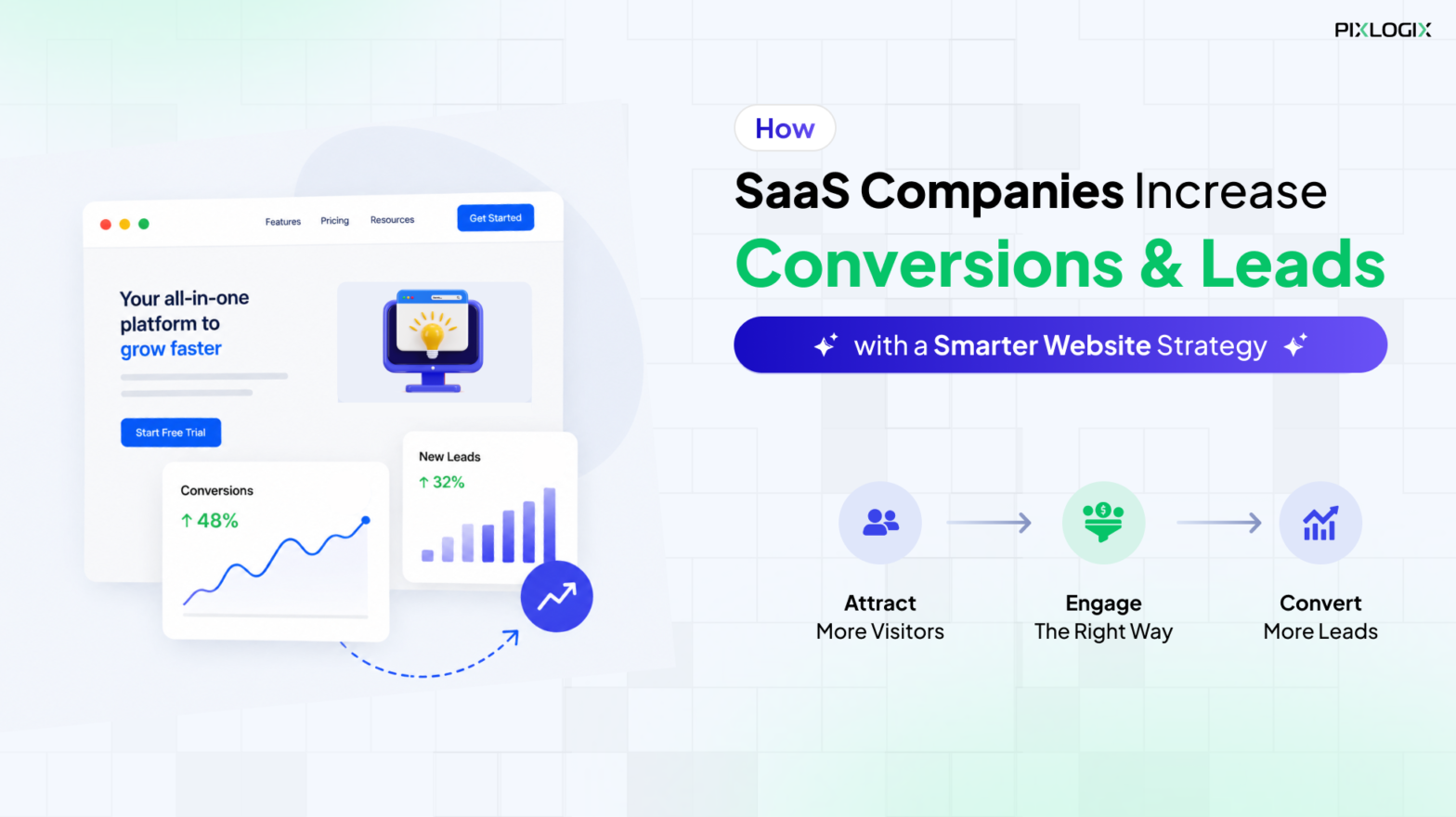
Have you ever wondered–how some leading SaaS brands generate leads consistently while others struggle to convert even though they have high traffic? The difference often lies in the strategies they follow.
Today’s SaaS buyers expect more. They want more personalized journeys and faster experiences. So, SaaS companies in 2026 should focus on conversion-focused strategies. Businesses that implement strong SaaS conversion strategies see better engagement and higher-quality sign-ups. They improve user engagement, generate more qualified sign-ups, and accelerate customer acquisition over time.
In this blog, let’s take a closer look at the top B2B SaaS lead generation strategies. They can turn your website into a scalable growth engine.
Why SaaS Websites Fail to Convert Visitors into Leads
Driving traffic is only half the battle. Many SaaS websites still struggle with conversions because they are not built for buyer intent. Let’s examine the reasons that hinder them:
Generic Website Structures That Don’t Match SaaS Buyer Journeys
Outdated template-based website structures treat every visitor the same. But modern SaaS buyers don’t convert instantly. That’s why SaaS websites need a smarter strategy.
It focuses on intent-driven experiences. Dedicated pages, role-based messaging, and strategically placed conversion points play a critical role. It improves SaaS B2B lead generation. And it guides prospects smoothly through the conversion funnel.
Lack of Clear Value Proposition and Conversion Paths
A strong product alone doesn’t convert. Many SaaS websites lose potential buyers because they focus heavily on technical features. And they fail to explain the business outcomes those features deliver.
This is where SaaS CRO best practices make a difference. Clear value propositions help users understand the product quickly. Frictionless conversion paths empower them to move forward confidently.
Disconnect Between Marketing and Website Experience
Another barrier is inconsistency. SaaS B2B lead generation also declines when product positioning and website experience fail to align. This inconsistency reduces buyer trust.
But a strong SaaS website strategy can navigate this issue smoothly. It creates consistency across every touchpoint. This improves engagement and increases conversions.
SaaS Conversion Funnel Strategy for Higher Leads
A high-performing SaaS website is built with intent. Here, every page should support a specific stage of the customer journey. Now let’s see how to map them:
Awareness → Consideration → Decision
Every stage requires different content.
- The awareness stage needs educational content, blogs, and SEO pages. It attracts potential users searching for solutions.
- The consideration stage must have comparison pages and case studies.
- Decision-stage visitors look for transparency. So, include pricing details and testimonials.
Key Website Conversion Points
Certain pages directly influence conversion rates.
- Landing pages should focus on a single user problem. It must guide visitors toward one clear action.
- Demo pages must highlight practical product outcomes instead of feature overload.
- Pricing pages should simplify comparisons and reduce hesitation.
Supporting Micro-Conversions
Not every visitor converts immediately. Micro-conversions like free trials and downloadable guides are needed. They help businesses engage users early. These smaller engagement points help nurture leads. Moreover, it gradually moves users toward conversion.
Core Elements of a High-Converting SaaS Website
A successful SaaS website needs product information. Every element should work strategically to improve user engagement and increase conversions. Let’s explore those core components:
Clear Value Proposition
Visitors decide within seconds. This is why modern-day businesses are adopting a smarter website strategy. With a strong value proposition, they highlight measurable outcomes. Furthermore, this approach strengthens SaaS conversion rate optimization. And it helps users quickly understand why the solution matters to their business.
Conversion-Focused Page Structure
Website structure directly impacts user movement and engagement. High-converting SaaS websites use dedicated landing pages. They are designed specifically for different ICPs, industries, or use cases to deliver more targeted experiences.
Logical content hierarchy improves readability. It keeps visitors focused on the next step without excessive information.
Speed, Performance & Scalability
Performance is a critical conversion factor. This is where custom web development services play a key role. It helps businesses build fast, scalable website architectures.
SaaS UX and CRO Best Practices for Higher Conversions
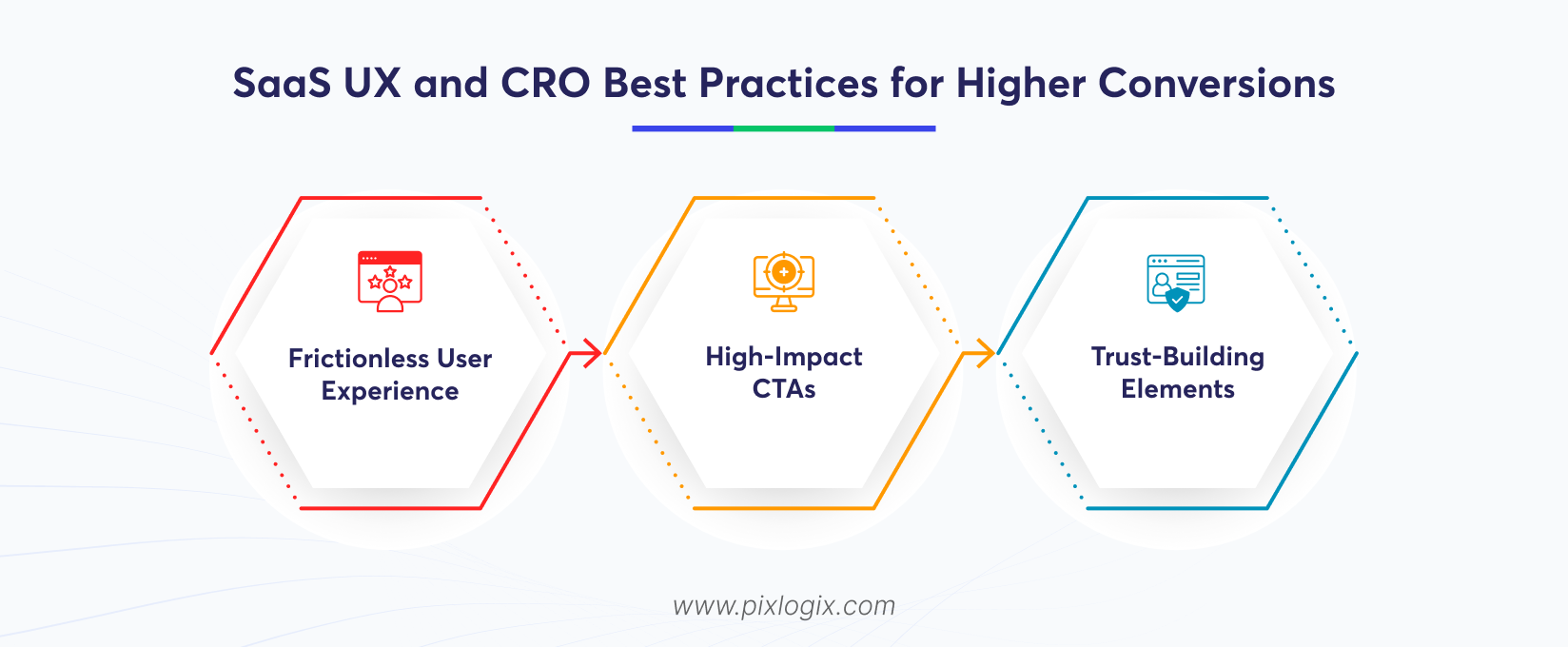
Design alone doesn’t improve conversions. The real impact comes from how effectively users interact with the website, access information, and complete actions without confusion or delays. Take a look at these SaaS CRO best practices for maximum conversions:
Frictionless User Experience
UX should feel effortless. Visitors shouldn’t struggle to locate product information or complete sign-up forms. That’s why brands need successful SaaS lead generation strategies. It focuses on intuitive navigation systems and simplified workflows. And it reduces user effort throughout the website journey.
High-Impact CTAs
CTA performance needs more. Placement, timing, wording, and visual hierarchy all influence user action. Strong CTAs should align with the visitor’s intent. And it must appear naturally within the browsing experience. Modern SaaS practices often use contextual CTAs. It’s good to include sticky buttons and action-focused copy. This improves conversion rates across high-intent pages.
Trust-Building Elements
Trust signals influence decisions. They are testimonials, case studies, and compliance badges. It helps validate product credibility.
Website Strategies for SaaS Lead Generation
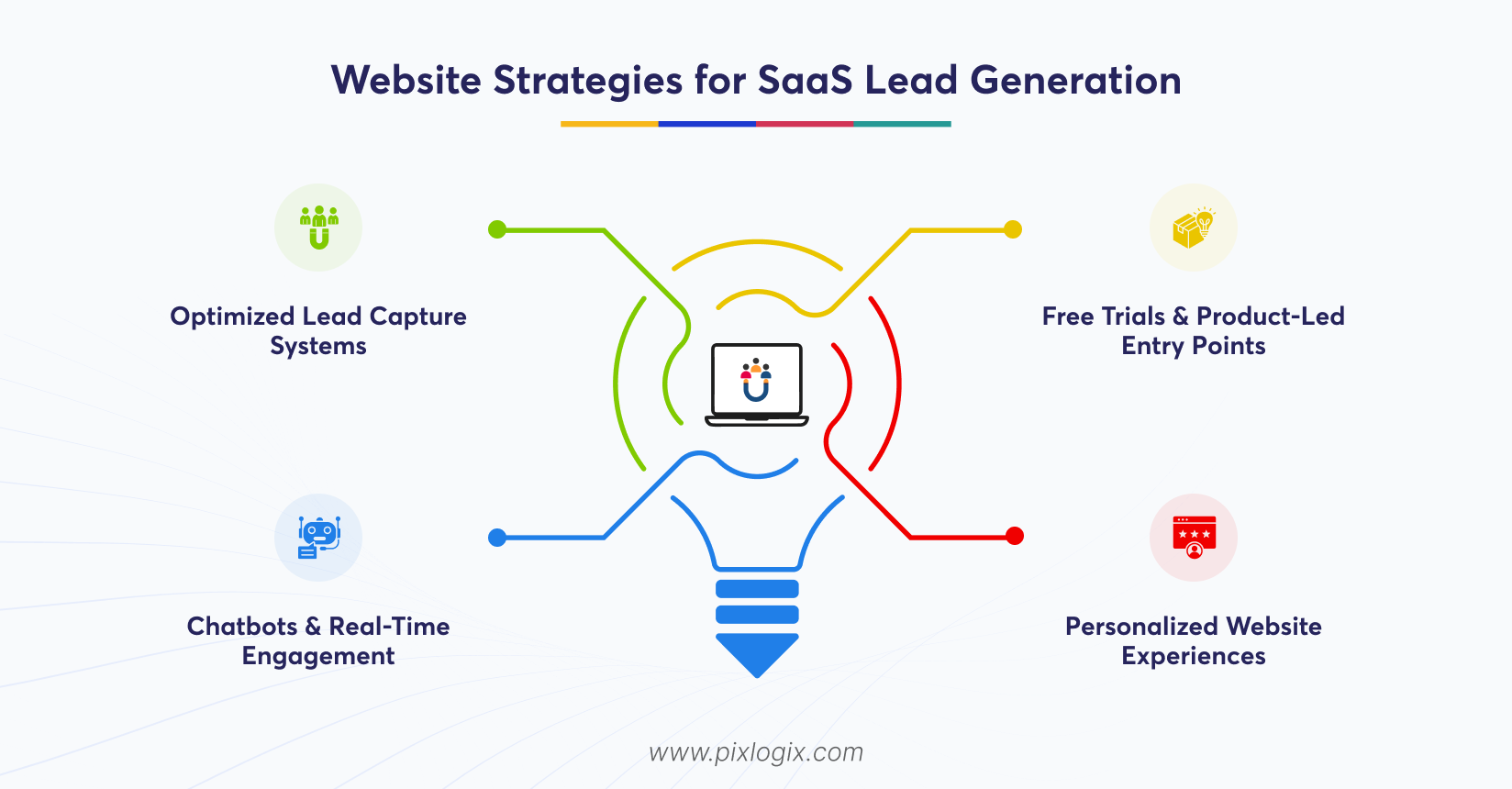
Your website should do more. It must actively engage visitors effectively and capture high-quality leads more efficiently. Let’s explore such tactics:
Optimized Lead Capture Systems
Smart lead capture systems use conditional fields, autofill capabilities, and progressive profiling. It helps them collect user information in smaller stages. And there is no need to ask for excessive details at once.
Free Trials & Product-Led Entry Points
Product-led acquisition is a conversion driver. Businesses now use sandbox environments, interactive walkthroughs, and limited-access free trials. These low-commitment entry points reduce hesitation. And it strengthens lead generation for SaaS and software companies.
Chatbots & Real-Time Engagement
User intent often drops when responses are delayed. That’s where businesses need AI-powered chatbots and live engagement systems. It captures leads with instant answers. Furthermore, it directs users to the most relevant pages. Thus, interactions get faster without manual sales support.
Personalized Website Experiences
Modern platforms use behavioral tracking. They also include CRM integrations and dynamic content engines. It helps them personalize website experience. This data-driven personalization improves content relevance. It also increases conversion opportunities across different audience segments.
Using CRO and Analytics to Improve SaaS Website Performance
Website optimization isn’t easy. It’s not a one-time process as it evolves based on user behavior. Let’s check out the ongoing CRO process:
A/B Testing Key Pages
Conversion bottlenecks often exist in high-intent pages. A/B testing helps businesses compare multiple versions of landing pages. So that they can identify which variation drives stronger user action. And there is no need to redesign entire websites. But SaaS teams can now make incremental performance improvements backed by real user data.
Heatmaps & User Behavior Analysis
Traditional analytics only show what users do. Heatmaps and session tracking explain why they behave that way. It helps monitor cursor movement, scroll depth, rage clicks, and inactive sections. Thus, it’s easy to find usability issues.
Sales Funnel Optimization
Every stage contains drop-off points. Continuous funnel optimization helps businesses identify these weak areas and streamline the path toward conversion. This includes reducing form fields. Furthermore, it simplifies boarding flows, improves transitions, and optimizes interactions. All this helps create a smoother conversion experience.
SEO and Content Strategies for SaaS Lead Generation
SaaS buyers rely heavily on search engines. That’s why they need a search-focused content ecosystem.
SEO-Optimized Landing Pages with Targeting SaaS Keywords
The pages that convert better are built around search intent. So, businesses should create dedicated pages with problem-specific SaaS search queries. In addition, technical SEO elements are needed. This includes schema markup and optimized heading structures. Core Web Vitals performance further boosts them. They improve search visibility and the efficiency of page indexing.
Blog and Content Aligned with Funnel Stages
Content guides decisions. Educational blogs help engage users who are still exploring solutions. Comparison of content support decisions. Integration guides and industry-focused resources help evaluation-stage buyers.
Decision-stage content works differently. They need ROI breakdowns, technical documentation, customer stories, and product walkthroughs. This helps them move toward conversion.
Internal Linking Strategy for Authority and Conversions
Links strengthen website structure. It connects blogs, feature pages, solution pages, and case studies, helping search engines understand content relationships. It also improves user navigation.
Small linking improvements create a big SEO impact. Over time, this increases authority flow and conversion opportunities.
Why Custom Web Development is Essential for SaaS Growth?
SaaS platforms evolve continuously. This is why custom web development has become a critical growth factor.
Limitations of Template-Based Websites
Pre-built website templates support general use cases. And it is not built for complex SaaS ecosystems. It restricts backend customization. API flexibility and feature expansion also become a struggle. Third-party plugins bring security threats. Moreover, it creates compatibility and maintenance issues.
Need for CRM, Analytics, and Automation Integrations
SaaS businesses thrive on connected systems. Through custom web development, secure API integrations link CRMs and SaaS tools into one ecosystem. As a result, you’ll get a centralized data flow. In addition, it enables smarter decision-making.
Scalability for Growing SaaS Platforms
Growth brings complexity. With custom development, businesses can design scalable modular architectures that can meet future demand. Cloud-ready environments and optimized backend systems are its core features.
How to Turn Your SaaS Website into a Continuous Growth Engine
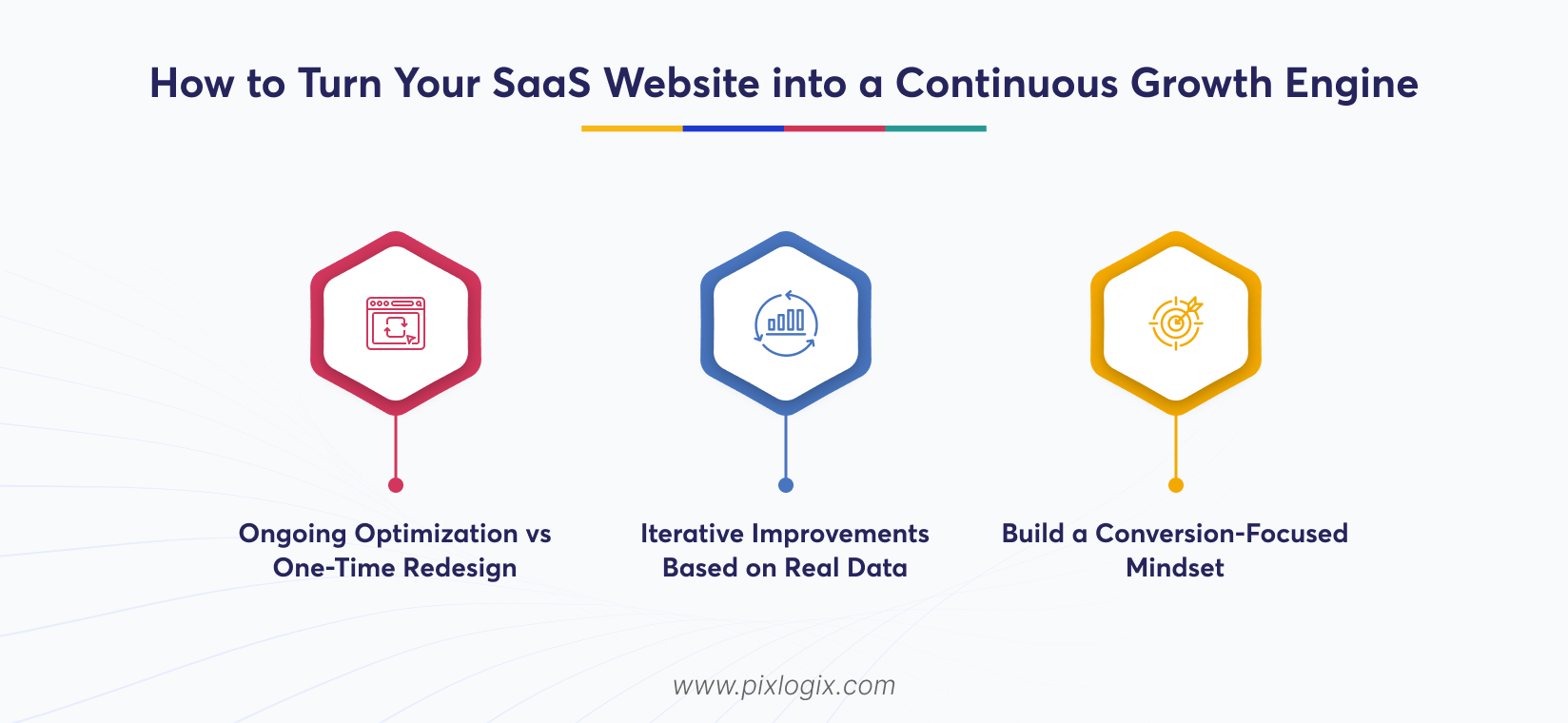
A SaaS website should never sit still. It must evolve as a digital asset to boost retention.
Ongoing Optimization vs One-Time Redesign
Restructuring is outdated now. Modern SaaS growth thrives on continuous enhancement cycles that scale. This means they need regular updates. From product messaging to strengthening technical SEO, everything must grow with business needs.
Iterative Improvements Based on Real Data
Data drives sustainability. SaaS teams should track everything, from retention trends and scroll‑depth analysis to acquisition costs. These insights guide improvements.
Build a Conversion-Focused Mindset
Growth is cultural. So, product teams, developers, UX specialists, and sales teams must work with one goal in mind. This fuels user-centric decisions.
Conclusion
Traffic alone won’t cut it. Modern SaaS businesses must design websites that guide users strategically throughout their buying journey. Every element matters. From clear value propositions to conversion‑focused UX, when all work together they boost engagement. Scalable architecture ensures resilience. While CRM integrations and continuous performance improvements ensure long‑term growth.
Ready to build a high-converting growth engine? Choose a results-driven company like Pixlogix. We offer top-notch web development services in India, helping businesses grow smarter. Get a quote today! Let’s help you build a website that turns casual visitors into qualified leads.


Written by Samir Bhimbha Founder & CEO
Samir Bhimbha is the Founder & CEO of Pixlogix Infotech Pvt. Ltd. which offers web and app solutions to fulfill business's online needs and help to improve their online presence with many clients in the USA, Europe, Australia, and more. He is a skilled entrepreneur, web designer, developer, and team leader who can handle every situation. With 15+ years of experience in UX/UI design and web development, he is leading a team of IT professional talents.
Related Post

Get in Touch Now!
Have a word with our expert consultants about your next project to get suggestive guidance & proposal.
Sales Inquiry


HR Inquiry
 India’s First SOTD Winner on Awwwards.com – 2010