

How do you know when your website needs a UI/UX upgrade? You can find the answers in your visitors’ behavior. They leave quickly or abandon forms without explaining why. These behaviors can be clear signs your website needs better UI/UX.
The warning signs are not limited to appearance. Slow-loading pages or confusing navigation can frustrate visitors while locating what they want. Mobile layouts may feel awkward. An inconsistent website user interface can weaken trust, and unclear conversion paths make taking action harder. So, you need to consider these issues a serious threat. Once you spot them, you can identify the design areas creating friction.
This blog breaks down the 10 key signs that your website’s UI/UX may need attention. We’ll also detail how to address these issues. By the end, you can create a smoother website that your visitors look for.
Why UI/UX Matters More Than Ever
People no longer have much patience for websites that make simple tasks difficult. They expect pages to load smoothly. And they want every interaction to feel straightforward from the first click. This is why you need to improve website UX.
A well-planned site helps visitors:
- Find relevant information without unnecessary searching.
- Move between pages with less confusion.
- Complete forms, purchases, or enquiries more easily.
- Use the website comfortably across different devices.
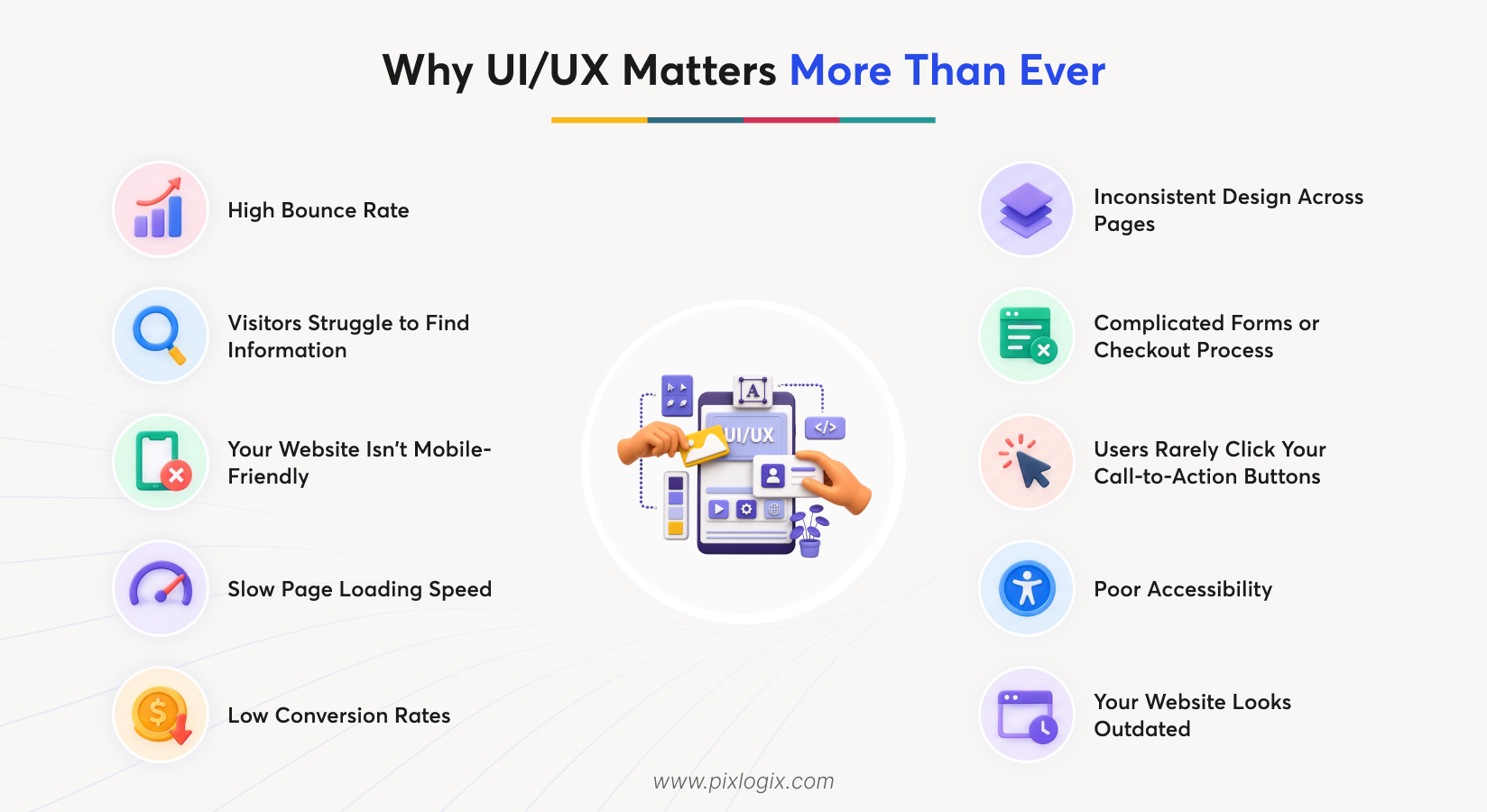
1. High Bounce Rate
Sometimes your website might have more visitors, but no one stays. This means they’re bouncing back because they couldn’t understand what your product does or what services your website offers. To overcome this issue, check all the key pages. Look for unclear messaging, crowded layouts, or poor navigation that affects your website user experience.
2. Visitors Struggle to Find Information
Information should be easy to find. Your site should never leave visitors to dig through menus, scroll endlessly, or push them to search elsewhere. If this happens, it shows you have weak organization or navigation. Thus, include simple categories, clear labels, and well-placed key details to improve your website usability gradually.
3. Your Website Isn’t Mobile-Friendly
Mobile usability can quickly affect visitor engagement. Small controls, awkward menus, clipped content, and difficult scrolling can make simple tasks frustrating. So, build a user-friendly website. Fix these issues and ensure a consistent experience across your site.
4. Slow Page Loading Speed
Slow pages need attention because visitors cannot interact with content that has not appeared yet. Heavy images, excessive scripts, and inefficient elements can create frustrating delays. Review loading times across important pages and devices, then address the biggest causes. Better speed makes your website performance more reliable and browsing less disruptive.
5. Low Conversion Rates
Low conversion rates can reveal friction between interest and action. That means visitors may understand your offer. But they’ll hesitate when the path to action feels unclear, distracting, or demanding. Thus, if you want to improve your website performance, find these friction points. Review where people stop and what they encounter there, then remove specific barriers instead of changing everything.
6. Inconsistent Design Across Pages
Inconsistent design can make different pages feel like separate websites. This includes different buttons, typography, spacing, colors, or navigation patterns. It can force visitors to relearn interactions across pages. All you need here is a consistent UI/UX design service that reduces confusion. It strengthens recognition and gives your website user interface a more organized structure as the site grows.
7. Complicated Forms or Checkout Process
Complicated forms can drive visitors away. Too many fields, unclear instructions, confusing errors, or unnecessary checkout screens can create avoidable effort at the final stage. So, review each step of the journey. Look at the process from the user’s perspective and find where it needs improvement without a complete website redesign.
8. Users Rarely Click Your Call-to-Action Buttons
Low CTA clicks can point to a deeper issue. The wording, timing, placement, or surrounding content may not clearly guide visitors toward the next step. Thus, look at the context. Each CTA should match visitor intent at that point, making the website easier to navigate and actions more purposeful.
9. Poor Accessibility
Accessibility problems can make websites harder to use. Weak contrast, missing image descriptions, unclear focus indicators, and inaccessible forms are common barriers. They may prevent some visitors from reading, navigating, or interacting independently. So, you need to address these issues early. This makes your website user experience more inclusive and easier to use, while supporting visitors with different needs.
10. Your Website Looks Outdated
An outdated website can weaken visitor trust. Cluttered layouts, dated interactions, and poor visual hierarchy often make important information harder to notice. That’s where you need a modern website design. It improves clarity and usability rather than simply following trends.
Benefits of Investing in Better UI/UX
A skilled UI/UX agency can improve the user experience throughout the visitor journey. They address usability issues and strengthen engagement. This creates a clear path that encourages conversions. Here are their benefits:
- Clear navigation makes finding information easy.
- Interaction becomes easier with a better mobile experience.
- Simpler forms support completed actions.
- Stronger engagement encourages visitors to stay longer and explore.
- More credibility gains the trust of users.
- Better conversion reduces friction.
Conclusion
The signs your website needs better UI/UX often show up in user behavior first. Visitors may leave quickly, abandon forms, or ignore CTAs before design issues become obvious. So, don’t rely on quick visual fixes. Instead, opt for a thoughtful approach that removes friction and creates a clearer, more effective digital experience.
Is your website losing visitors because of avoidable UI/UX issues? Then, it’s time to look for a trusted UI/UX design company in India like Pixlogix. We start by identifying your site’s usability gaps. Then, we help simplify navigation, improve mobile experiences, and create clearer user journeys. Our team also provides full support to engage and convert users. Get a quote today! Let’s discuss your website’s UI/UX needs and build an experience that works better for your users.

Written by Samir Bhimbha Founder & CEO
Samir Bhimbha is the Founder & CEO of Pixlogix Infotech Pvt. Ltd. which offers web and app solutions to fulfill business's online needs and help to improve their online presence with many clients in the USA, Europe, Australia, and more. He is a skilled entrepreneur, web designer, developer, and team leader who can handle every situation. With 15+ years of experience in UX/UI design and web development, he is leading a team of IT professional talents.
Related Post


Get in Touch Now!
Have a word with our expert consultants about your next project to get suggestive guidance & proposal.
Sales Inquiry


HR Inquiry
 India’s First SOTD Winner on Awwwards.com – 2010